Objective: To explain why cravings spike at the 30, 60, and 90-day recovery marks, what the brain is doing during those periods, and how to get through them.
Key Takeaways:
- Cravings spike at specific milestones because the brain’s dopamine system is still healing
- Post-acute withdrawal syndrome causes craving waves long after detox ends
- Triggers shift from physical to emotional to social as recovery progresses
- Routine, therapy, and support groups are proven tools for managing cravings
- Professional help at the right time changes long-term recovery outcomes
Why Cravings Often Get Stronger During Recovery Milestones
Many people are surprised when cravings return strongly after the first few weeks of recovery. You expect cravings to shrink as time passes. But they do not follow a straight downward path.
At Southern California Recovery Centers, people describe this constantly, feeling blindsided by cravings right when they thought the worst was behind them. It is not a weakness. It is biology.
Why 30, 60, and 90 Days Can Feel Surprisingly Difficult
Many people notice stronger cravings around 30, 60, and 90 days because these milestones often bring emotional, social, and routine-based challenges. The timing is not exact for everyone, but the pattern is common enough to take seriously. At 30 days, early motivation fades and buried emotions surface. At 60 days, growing confidence creates blind spots. At 90 days, the brain is still in the middle of repair, and stress hits harder than expected.
The Difference Between Early Sobriety and Long-Term Recovery
Stopping substance use and building a stable life without it are two different challenges. Early sobriety is reactive. Long-term recovery is intentional. The 30 to 90-day window is where people move between those phases, and that is where real vulnerability lives.
Why Feeling Better Physically Does Not Always Mean Cravings Are Gone
By day 30, sleep improves and appetite returns. The body feels better. But the brain runs on a slower timeline. Physical and neurological recovery happen at different speeds, and that gap is where cravings grow.
Understanding the Brain’s Healing Process During Recovery
How Addiction Changes Dopamine and Reward Pathways
Every addictive substance floods the brain with dopamine, the chemical tied to pleasure and reward. Over time, the brain produces less dopamine on its own and reduces its receptor count. Natural rewards stop feeling satisfying. Only the substance delivers what the brain now expects.
Why the Brain Takes Time to Rebalance After Substance Use
The brain’s reward system can take time to stabilize after substance use. For some people, the first few months bring noticeable changes in mood, motivation, and cravings. During that window, the brain is unusually reactive. A familiar smell, an old song, or a route driven many times before can trigger a craving automatically because the brain has stored those associations deep.
The Link Between Brain Healing and Stronger Cravings at Certain Stages
As the brain heals, it becomes more sensitive to craving cues before it becomes less sensitive. It is re-learning what reward feels like, which is why cravings can feel stronger at 60 days than they did at day five.
The Addiction Cravings Timeline: Why Triggers Change Over Time
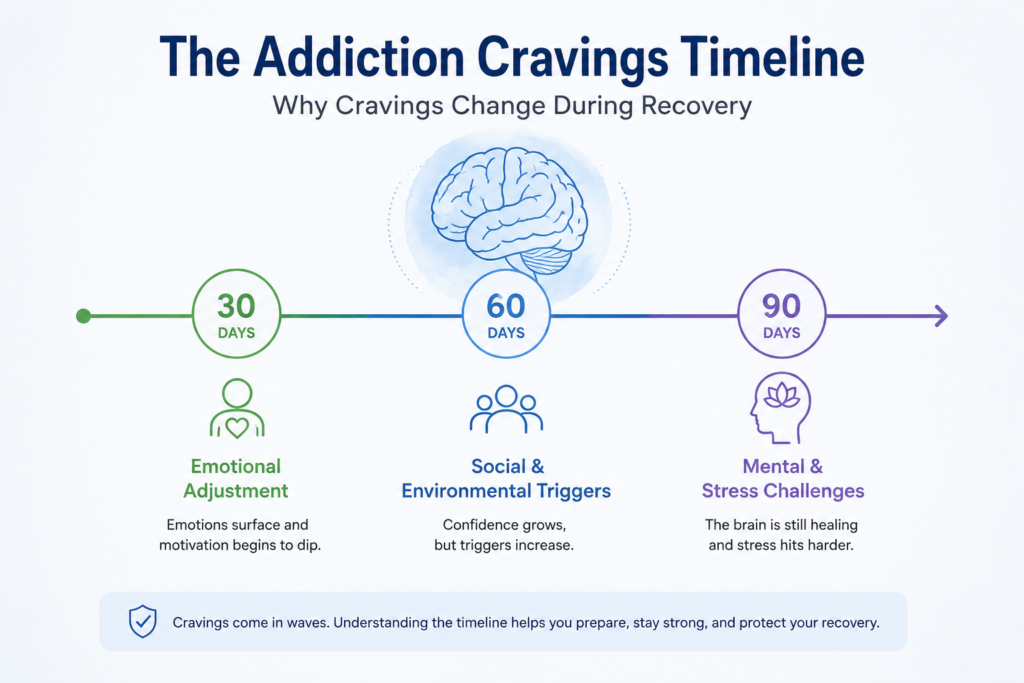
Cravings Around 30 Days: The Emotional Adjustment Phase
When the Initial Motivation Starts to Fade
The first weeks carry urgency and determination. By day 30, that rush settles, and cravings find more room to grow.
Emotional Stress, Routine Changes, and Mental Fatigue
Emotions that were numbed for months begin surfacing. Managing them without substances is exhausting. The brain is genuinely fatigued, and that fatigue makes resisting cravings much harder than it looks from the outside.
Cravings Around 60 Days: The Confidence Trap
Why Overconfidence Can Increase Relapse Risk
At 60 days, people feel proud, and they should. But pride sometimes tips into “I have this handled.” That thinking leads to relaxed boundaries: skipping meetings, returning to old environments, and assuming that one situation will not cause harm.
Social Situations, Old Habits, and Environmental Triggers
The brain links people, places, and routines to past substance use. Returning to those environments reactivates those pathways before a person consciously registers what is happening.
Cravings Around 90 Days: The Mental and Emotional Reset Period
Why the Brain Is Still Healing at Three Months
Ninety days is a genuine milestone. But the reward system is still mid-repair, and emotional regulation remains shaky, the gap between how things look and how they feel internally is still wide.
Stress, Frustration, and Motivation Challenges During Recovery
By 90 days, early support sometimes loosens. Family assumes things are fine. But internally, everyday stress still lands harder than it used to. This is when people need more support, not less.
How Post-Acute Withdrawal Syndrome Affects Recovery
What Happens After Physical Withdrawal Ends
Physical withdrawal ends within days or weeks. But many people experience a second, quieter wave of symptoms called post-acute withdrawal syndrome, more common than most people realize.
Common Symptoms Like Anxiety, Sleep Problems, Mood Swings, and Low Motivation
Post-acute withdrawal syndrome shows up as persistent anxiety, sleep that never feels restful, mood swings without a clear cause, brain fog, and low-grade emotional flatness. Symptoms come in waves, a good week can be followed by a hard crash with no obvious trigger.
Why PAWS Can Make Cravings Feel Stronger at Recovery Milestones
Post-acute withdrawal symptoms can come in waves during early recovery. Some people notice difficult periods around major recovery milestones, including 30, 60, or 90 days. When it does, emotional regulation weakens and cravings intensify, not because recovery is failing but because the brain is cycling through a difficult repair phase.
Common Relapse Triggers During Early Recovery
Emotional Triggers Such as Stress, Loneliness, and Anxiety
Substances were often used to manage hard emotions. Without them, suppressed stress, loneliness, and anxiety begin pushing through at unexpected moments, often late at night or during idle time when distraction runs out. These are the most common triggers in the first 90 days.
Social Triggers and Exposure to Old Environments
Old friends, familiar places, old routines, each carries deep brain associations tied to substance use. Exposure can trigger a craving in seconds, often before any conscious decision is made.
Physical Triggers Including Poor Sleep and Fatigue
Sleep deprivation weakens impulse control directly. A tired brain makes worse decisions and feels emotions more intensely. Protecting sleep is a genuine relapse prevention strategy.
Why Complacency Can Become a Hidden Risk
Complacency feels like confidence but functions like a risk. Dropping daily recovery habits because things seem fine is one of the quietest paths back toward relapse.
How to Manage Cravings and Protect Long-Term Recovery
Building Healthy Routines That Reduce Triggers
A consistent daily structure can reduce the boredom and emotional drift that cravings often feed on. This may include fixed sleep times, regular meals, movement, and scheduled recovery activities.
The Role of Therapy in Understanding Cravings and Behavior Patterns
Therapy helps identify what drives cravings beneath the surface. Cognitive behavioral therapy is particularly effective at changing thought patterns that make cravings feel impossible to resist.
Why Support Groups Help During Difficult Recovery Milestones
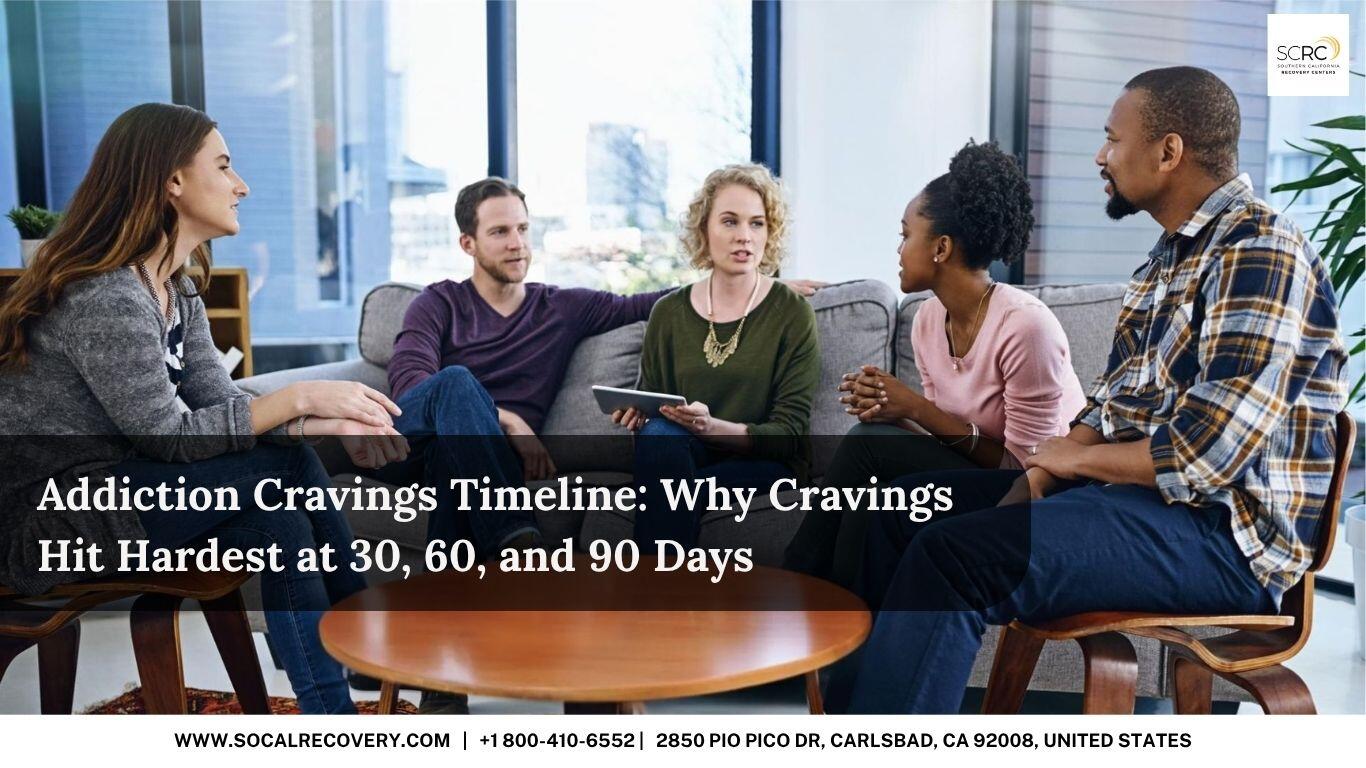
In a support group, you hear your own experience described by someone else. That alone reduces the shame that worsens cravings. Knowing that confidence dips and motivation changes can happen during recovery may make these moments feel less shameful and easier to manage.
Creating a Relapse Prevention Plan for High-Risk Moments
A relapse prevention plan names your triggers, your coping responses, and who to call. It removes decision-making from high-pressure moments, when thinking clearly is hardest.
Healthy Habits That Support Dopamine Recovery
Exercise, quality sleep, balanced nutrition, and mindfulness all support natural dopamine production. These are not optional additions. They are important recovery supports.
Why Professional Addiction Treatment and Long-Term Support Matter
How Structured Care Helps Manage Cravings Safely
Structured programs provide clinical support and behavioral tools at the stages when people are most at risk. They address what willpower alone cannot reach.
The Benefits of Ongoing Therapy and Recovery Programs
The emotional roots of addiction do not resolve after detox alone. Ongoing therapy addresses those roots and catches warning signs early.
When to Seek Help From a Detox Center California Program for Continued Support
If cravings are intensifying or post-acute withdrawal syndrome symptoms are disrupting daily life, reaching out to a detox center in California program or a structured recovery program is a practical next step.
Final Thoughts: Cravings Are Part of Recovery, Not Failure
Cravings at 30, 60, and 90 days do not mean something went wrong. They mean the brain is doing exactly what it does when healing from addiction, working through repair on its own timeline.
Southern California Recovery Centers supports people during these early recovery stages with structured care, therapy, and relapse prevention planning.
If cravings are getting harder to manage, do not wait. Reach out to a detox center in California or a structured recovery program. Professional support at these high-risk milestones is one of the most effective tools for long-term relapse prevention and lasting recovery.
Struggling With Cravings During Recovery?
Cravings at 30, 60, and 90 days of recovery can feel overwhelming, but they are often a normal part of the brain’s healing process. Southern California Recovery Centers provides structured support, evidence-based therapy, relapse prevention planning, and long-term recovery programs designed to help individuals navigate recovery milestones, manage triggers, and build a strong foundation for lasting sobriety.
Speak With a Recovery Specialist TodayFrequently Asked Questions
{ “@context”: “https://schema.org”, “@type”: “FAQPage”, “mainEntity”: [ { “@type”: “Question”, “name”: “Why do cravings get stronger at 30, 60, and 90 days?”, “acceptedAnswer”: { “@type”: “Answer”, “text”: “The brain’s dopamine system is still repairing during these milestones and can become temporarily more sensitive to craving triggers. Post-acute withdrawal syndrome may also flare during these periods, which can intensify cravings even after weeks of recovery progress.” } }, { “@type”: “Question”, “name”: “What is the addiction cravings timeline?”, “acceptedAnswer”: { “@type”: “Answer”, “text”: “The addiction cravings timeline describes how craving patterns change during recovery. Early recovery is often dominated by physical cravings. Around 30 days, emotional triggers become more prominent. By 60 days, social and environmental cues increase risk, and around 90 days, mental fatigue linked to ongoing brain healing can create renewed vulnerability.” } }, { “@type”: “Question”, “name”: “How long does post-acute withdrawal syndrome last?”, “acceptedAnswer”: { “@type”: “Answer”, “text”: “Post-acute withdrawal syndrome can last anywhere from a few months to up to two years depending on the substance used, duration of use, and individual biological factors. Symptoms often come in waves, and medical and therapeutic support can help reduce their intensity.” } }, { “@type”: “Question”, “name”: “What are the best ways to manage cravings during recovery?”, “acceptedAnswer”: { “@type”: “Answer”, “text”: “Managing cravings during recovery typically involves maintaining a structured daily routine, attending therapy sessions, participating in support groups, following a relapse prevention plan, engaging in regular exercise, ensuring quality sleep, and staying consistently connected to a recovery program to build long-term resilience.” } } ] }Why Do Cravings Get Stronger at 30, 60, and 90 Days?
The brain’s dopamine system is still repairing at these points and temporarily becomes more sensitive to craving triggers. Post-acute withdrawal syndrome also flares at these milestones, amplifying cravings even after weeks of solid progress.
What Is the Addiction Cravings Timeline?
The addiction cravings timeline describes how craving patterns shift during recovery. Physical cravings lead early. By 30 days, emotional triggers dominate. At 60 days, social and environmental cues carry the most risk. At 90 days, mental fatigue tied to ongoing brain healing creates a new vulnerability window.
How Long Does Post-Acute Withdrawal Syndrome Last?
Post-acute withdrawal syndrome can last from a few months to two years, depending on the substance, the duration of use, and individual biology. Symptoms come in waves, and medical support reduces their intensity.
What Are the Best Ways to Manage Cravings During Recovery?
A daily routine, regular therapy, support groups, a written relapse prevention plan, regular exercise, quality sleep, and ongoing connection to a recovery program, together these build real resilience through the hardest milestones.