Objective
This blog explains the real rehab cost of drug treatment in California in simple terms. It covers what affects price, what private insurance may pay, how Medi-Cal and Medicare fit in, and how to check your benefits before you commit to a program. The goal is to help families understand the numbers without confusion or guesswork.
Key Takeaways
- Drug rehab in California can cost very little out of pocket or many thousands of dollars, depending on the level of care, length of stay, and insurance.
- Private insurance often helps pay for detox, inpatient care, outpatient care, therapy, and medication, but each plan has different rules.
- Medi-Cal covers substance use disorder treatment for eligible Californians through Drug Medi-Cal and DMC-ODS services.
- Medicare can cover parts of substance use treatment, including inpatient and certain outpatient services, depending on the setting and service.
- Many affordable rehab centers become much more affordable once benefits are verified correctly.
What Makes Rehab Cost So Different
There is no single price for rehab in California. One person may only need outpatient therapy a few days a week. Another may need detox, residential treatment, medication, and a longer step-down plan. That is why rehab costs can vary so much from one program to another.
The biggest cost drivers are usually:
- Detox or no detox
- Inpatient or outpatient care
- Length of stay
- Medical and psychiatric needs
- Insurance network status
- Location and amenities
- Medication and lab work
In California, private treatment programs may also differ in whether they offer detox, inpatient care, outpatient care, or a full continuum of care. Southern California Recovery Centers notes that clients commonly stay 30, 60, or 90 days, and that insurance may cover all or a significant portion of treatment, depending on the policy.
Average Rehab Cost By Level Of Care
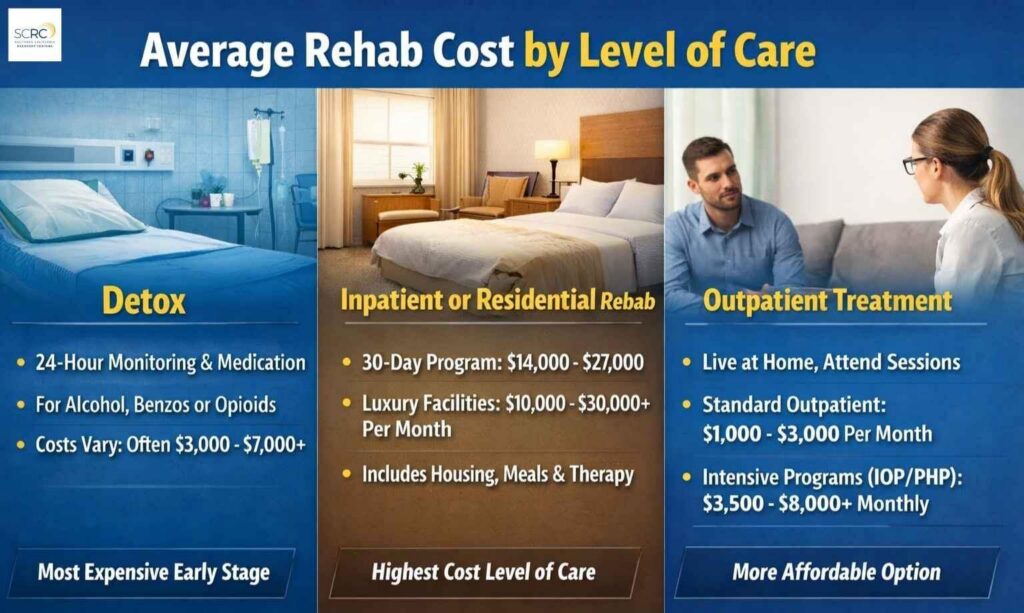
A practical way to understand rehab cost is to break it down by level of care.
Detox
Medical detox is often the first step for people withdrawing from alcohol, benzodiazepines, or opioids. Detox adds cost because it may include 24-hour monitoring, medication, and medical staff. Exact prices vary widely by facility and length, but detox is usually one of the more expensive early stages when paid without insurance. General consumer treatment pricing sources note that overall rehab prices can vary sharply depending on detox needs and medical intensity.
Inpatient Or Residential Rehab
Residential treatment is usually the highest-cost level because housing, meals, therapy, and clinical care are bundled together. A common national range for a 30-day inpatient program is about $14,000 to $27,000, and some residential programs can run $10,000 to $30,000 or more per month, depending on services and setting. California programs can fall within or above those ranges depending on location and amenities.
Outpatient Treatment
Outpatient care usually costs less than residential care because you live at home. Costs still depend on intensity. A standard outpatient program may cost much less than an intensive outpatient program, while PHP and IOP can become more expensive because they involve more clinical hours each week. Medicare also recognizes intensive outpatient programs for mental health and substance use conditions, which shows how structured this level of care can be.
For many families, the most useful question is not “What is the total price?” but “What level of care is medically right, and what will insurance actually pay for?”
What Private Insurance Coverage Rehab Usually Includes
Under the Affordable Care Act, Marketplace plans must cover mental health and substance use disorder services as essential health benefits, and parity rules generally mean these benefits cannot be more restrictive than medical and surgical benefits. California also says its mental health parity law requires state-regulated commercial plans to provide full coverage for medically necessary treatment of mental health conditions and substance use disorders.
That does not mean every plan covers every rehab stay in full. Insurance coverage for rehab usually depends on things like:
- In-network vs out-of-network status
- Deductible
- Copay or coinsurance
- Preauthorization rules
- Medical necessity review
- Covered level of care
Private plans may help cover:
- Detox
- Residential rehab
- Therapy
- Medication management
- Outpatient treatment
- IOP or PHP
- Aftercare planning
Southern California Recovery Centers says it accepts many insurance plans and that, depending on the policy, insurance may cover all or a significant portion of treatment expenses. Its insurance pages also note that coverage details vary by plan, location, and level of care.
Medi-Cal And Medicaid Coverage In California
If someone in California has Medicaid, that usually means Medi-Cal. Drug Medi-Cal is a treatment funding source for eligible Medi-Cal members, and California’s DMC-ODS program organizes substance use disorder treatment services for participating counties. Covered services can include outpatient treatment, intensive outpatient treatment, residential treatment, withdrawal management, medication-assisted treatment, and recovery services, depending on eligibility and county program structure.
This matters because Medi-Cal can make affordable rehab centers much more accessible for California residents who qualify. It will not make every private facility available, but it can open the door to covered treatment through county networks and contracted providers. Medi-Cal also offers free or low-cost health coverage for Californians who meet eligibility rules.
Medicare Coverage For Addiction Treatment
Medicare can also help with addiction treatment, but coverage depends on where and how the services are delivered.
In general:
- Part A covers inpatient hospital care, including certain inpatient mental health and substance use services.
- Part B covers many outpatient mental health and substance use services, including certain intensive outpatient services.
- For opioid use disorder, Medicare may cover medications like methadone, buprenorphine, naltrexone, and naloxone in certain treatment settings or plan types.
Medicare does not simply pay every rehab bill automatically. The service must be covered, medically appropriate, and delivered in a covered setting. That is why benefit verification matters so much.
What Changes Your Out-Of-Pocket Cost
Even with insurance, your final rehab cost can still change based on details that people often miss.
Watch for these factors:
- Remaining deductible
- Daily copays
- Coinsurance percentage
- Out-of-network penalties
- Separate doctor bills
- Medication costs
- Room upgrades or non-covered amenities
- Length extensions beyond initial approval
A person may think a program is too expensive, then learn the real out-of-pocket cost is much lower after benefits are checked. The opposite can also happen if a center is out of network or if the plan only approves part of the stay. This is one reason insurance coverage for rehab should always be verified before admission, not after.
Estimate Your Rehab Cost Today
Verify your out-of-pocket cost and explore affordable rehab centers in California. Confirm insurance coverage before enrolling.
Check NowHow To Verify Insurance Before You Enroll
Before choosing a program, take these steps:
- Ask if the center is in the network
- Ask which levels of care are covered
- Ask whether preauthorization is required
- Ask for a written estimate of the out-of-pocket cost
- Confirm deductible, copay, and coinsurance
- Ask what happens if a longer stay is recommended
- Check whether medications, labs, and physician visits are billed separately
Southern California Recovery Centers says its admissions team can help verify benefits and explain what a policy may cover. That kind of check can save time and prevent surprise bills.
Final Thoughts
Drug rehab in California can be expensive, but the real answer depends on the level of care and the insurance plan. Some people pay mostly out of pocket. Others use private insurance, Medi-Cal, or Medicare to reduce the cost sharply. The smartest move is to match the right level of treatment with a verified benefits check before enrolling.
Southern California Recovery Centers highlights that affordability should not stop someone from seeking treatment and that many plans may cover a meaningful share of care. That is why understanding insurance coverage rehab, comparing programs carefully, and looking for truly affordable rehab centers matters so much.
Before you rule out treatment because of price, verify the benefits. The real cost may be far lower than you expect.
FAQs
What Is The Average Rehab Cost In California?
There is no single statewide price, but common consumer benchmarks put 30-day inpatient rehab at around $14,000 to $27,000. At the same time, some residential programs run roughly $10,000 to $30,000 or more per month, depending on services and setting.
Does Private Insurance Cover Drug Rehab In California?
Often yes. ACA Marketplace plans must cover mental health and substance use disorder services as essential health benefits, but your exact coverage depends on your plan, network, and medical necessity review.
Does Medi-Cal Cover Addiction Treatment?
Yes. Drug Medi-Cal and DMC-ODS cover substance use disorder treatment services for eligible Medi-Cal members in California.
Does Medicare Pay For Rehab?
Medicare can cover parts of inpatient and outpatient substance use treatment, depending on the setting and service.
How Can I Find Affordable Rehab Centers?
Start by checking in-network options, Medi-Cal eligibility, Medicare benefits if applicable, and whether the program will verify benefits and give a clear estimate before admission.