Objective
This blog explains cocaine overdose in simple terms. It covers why it can be life-threatening, what warning signs to watch for, why there is no safe amount, and when to get emergency help. It also explains how treatment and prevention can reduce future risk.
Key Takeaways
- Yes, the question of whether you can overdose on cocaine is a real concern.
- Cocaine overdose can affect the heart, brain, breathing, and body temperature.
- There is no safe answer to how much cocaine to overdose.
- Purity, fentanyl contamination, health history, and mixing substances can raise the risk.
- Cocaine overdose signs can include chest pain, seizures, paranoia, confusion, and breathing trouble.
- A suspected overdose needs immediate emergency medical help.
- Long-term support, including cocaine addiction help in California, can reduce future overdose risk.
Table Of Contents
- What Is A Cocaine Overdose
- Can You Overdose On Cocaine
- Why Cocaine Overdose Can Be Life-Threatening
- Cocaine Overdose Signs
- How Much Cocaine To Overdose
- Risk Factors That Make Overdose More Likely
- Cocaine Overdose Timeline
- What To Do In An Emergency
- Treatment And Prevention
- FAQs
What Is A Cocaine Overdose
A cocaine overdose happens when cocaine causes serious harm to the body or brain. This can happen after a single use or after repeated use. It can also happen when a person uses more than their body can handle.
Cocaine is a strong stimulant. It speeds up the nervous system. This can raise heart rate, blood pressure, body temperature, and anxiety. In severe cases, cocaine intoxication can lead to seizures, irregular heart rhythm, heart attack, breathing problems, and death.
Southern California Recovery Centers understands that overdose education can help families and individuals notice danger sooner. Clear information can save time when every minute matters.
Can You Overdose On Cocaine
Yes. Can you overdose on cocaine is an important question, and the answer is yes. A cocaine overdose can happen even if a person has used it before without a serious reaction.
The risk is not the same every time. A person may think they know their limit, but the strength of cocaine can vary. Cocaine may also be mixed with other substances. This can make the effects harder to predict.
A cocaine overdose is not always slow or easy to spot. It may begin with agitation, sweating, chest pain, panic, or confusion. It can then become severe quickly.
Why Cocaine Overdose Can Be Life-Threatening
Cocaine affects several body systems at the same time. This is why an overdose can become dangerous fast.
It Can Strain The Heart
Cocaine can make the heart beat faster and harder. It can also raise blood pressure. This may lead to chest pain, abnormal heart rhythm, or a heart attack. Medical sources note that severe cocaine toxicity can affect the heart and may lead to acute coronary syndrome, stroke, or death.
It Can Affect The Brain
Cocaine can cause severe anxiety, confusion, agitation, and paranoia. It can also lead to seizures. A seizure during overdose is a medical emergency.
It Can Affect Breathing
Some people may breathe very fast, struggle to breathe, or become unable to breathe normally. If cocaine is mixed with opioids such as fentanyl, breathing problems can become even more dangerous.
It Can Raise Body Temperature
High body temperature can harm organs. Severe sweating, fever, and overheating should be taken seriously.
Cocaine Overdose Signs
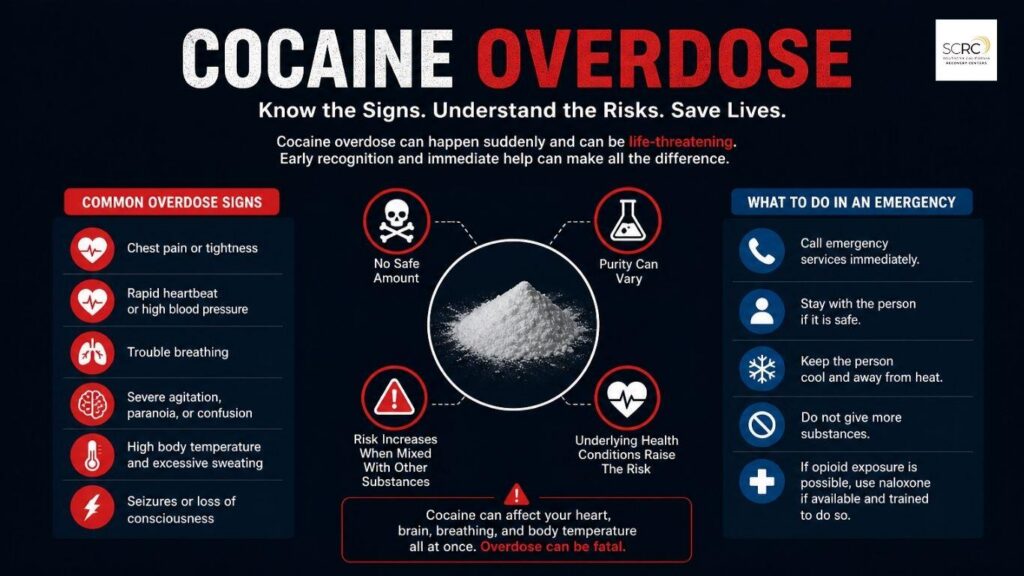
Knowing cocaine overdose signs can help someone act quickly. Do not wait for every symptom to appear. One serious warning sign can be enough to call emergency services.
Physical Signs
- Chest pain
- Very fast heartbeat
- High blood pressure
- Trouble breathing
- Severe sweating
- High body temperature
- Nausea or vomiting
- Tremors or shaking
- Seizures
- Blue or pale skin
- Fainting or loss of awareness
Mental And Emotional Signs
- Extreme panic
- Confusion
- Paranoia
- Hallucinations
- Severe agitation
- Aggressive behavior
- Feeling detached from reality
MedlinePlus lists severe cocaine intoxication symptoms such as seizures, loss of awareness, very high body temperature, irregular heart rhythm, trouble breathing, and death.
How Much Cocaine To Overdose
Many people search for how much cocaine to overdose, but there is no safe number. No dose can be called safe.
The risk depends on many things, such as:
- Purity of the cocaine
- Whether it is mixed with other substances
- Heart health
- Body size
- Tolerance
- Hydration
- Heat exposure
- Alcohol or drug mixing
- Mental health condition
- How the body reacts that day
Even a person who has used cocaine before can overdose. Tolerance does not protect someone from heart problems, seizures, or contamination.
Risk Factors That Make Overdose More Likely
Some situations raise the chance of overdose.
Mixing Cocaine With Alcohol Or Other Drugs
Mixing substances increases risk. Alcohol can add strain to the body. Opioids such as fentanyl can make an overdose more complex and more deadly.
Unknown Purity
Street drugs can vary in strength. A person may use what appears to be the same amount, but the effect may be much stronger.
Fentanyl Contamination
Fentanyl is a powerful opioid. If cocaine is contaminated with fentanyl, a person may face both stimulant overdose and opioid overdose risk.
Heart Or Blood Pressure Problems
Cocaine can place heavy stress on the heart. People with heart problems or high blood pressure may be at greater risk.
Heat And Dehydration
Hot weather, dancing, heavy activity, or dehydration can increase strain on the body. MedlinePlus notes that hot weather can worsen dehydration-related harm.
Cocaine Overdose Timeline
Overdose timing can vary. Symptoms may appear quickly, especially when the body reacts strongly.
| Stage | What May Happen |
| Early Warning | Anxiety, sweating, fast heart rate, restlessness |
| Escalation | Chest pain, confusion, paranoia, severe agitation |
| Severe Danger | Seizures, breathing trouble, fainting, very high temperature |
| Emergency Phase | Heart attack, stroke, loss of consciousness, death risk |
This timeline is not exact. Some people may move into serious danger very quickly. Treat warning signs as urgent.
What To Do In An Emergency
A suspected cocaine overdose needs immediate medical help.
Take These Steps
- Call emergency services right away.
- Stay with the person if it is safe to do so.
- Keep them away from heat.
- Do not give more substances.
- Do not try to make them “sleep it off.”
- If trained, give basic first aid.
- If opioid exposure is possible and naloxone is available, use it as directed while waiting for help.
Naloxone can reverse opioid overdose effects, but it does not treat the stimulant effects of cocaine. Medical care is still needed.
Treatment And Prevention
Emergency care may focus on stabilizing the person. Doctors may monitor the heart, breathing, temperature, blood pressure, and brain activity. Medical testing may include an ECG, blood tests, toxicology screening, or imaging when needed.
After the emergency passes, treatment should not stop there. Cocaine use can become a repeated pattern. Cravings, stress, social triggers, and emotional pain can pull a person back into use.
Support may include:
- Medical evaluation
- Therapy
- Relapse prevention planning
- Family support
- Mental health care
- Peer support
- Structured addiction treatment
People looking for cocaine addiction help in California may benefit from a care plan that looks at both substance use and mental health needs. A cocaine addiction treatment program in California can help someone build safer habits, understand triggers, and reduce future overdose risk.
Southern California Recovery Centers may be part of the recovery conversation for people who need structured support after cocaine use has become harmful.
Get Immediate Help for Cocaine Overdose Risks and Recovery
Cocaine overdose can be life-threatening and unpredictable. If you or someone you love is struggling with cocaine use, early intervention can make all the difference. At Southern California Recovery Centers, we provide structured, evidence-based care and long-term recovery support to help you regain control and reduce future overdose risks.
Get Confidential Help TodayFinal Thoughts
Cocaine overdose is dangerous because it can affect the heart, brain, breathing, and body temperature at the same time. It can happen suddenly. It can also happen even when a person thinks they know their limit.
There is no safe answer to how much cocaine to overdose. The safest step is to avoid cocaine and get support if use has become hard to stop. Knowing cocaine overdose signs can help families and friends act faster in an emergency.
Southern California Recovery Centers can support people who are ready to understand their risks and take steps toward recovery.
If cocaine use is putting your health or safety at risk, reaching out for a cocaine addiction treatment program in California can be the first step toward real support and safer days ahead.
FAQs
1. Can You Overdose On Cocaine?
Yes. Cocaine overdose can happen and may be life-threatening. It can affect the heart, brain, breathing, and body temperature.
2. What Are Common Cocaine Overdose Signs?
Common signs include chest pain, fast heartbeat, sweating, confusion, paranoia, seizures, trouble breathing, and loss of consciousness.
3. How Much Cocaine To Overdose?
There is no safe amount. Overdose risk depends on purity, mixing substances, health history, tolerance, and how the body reacts.
4. Can Cocaine Cause A Heart Attack?
Yes. Cocaine can raise heart rate and blood pressure. It can also trigger abnormal heart rhythms and a heart attack.
5. What Should I Do If Someone May Be Overdosing?
Call emergency services right away. Stay with the person if it is safe, keep them away from heat, and do not give any more substances.
6. Can Fentanyl Be Mixed With Cocaine?
Yes. Cocaine can be contaminated with fentanyl. This increases overdose risk and can cause serious breathing problems.
7. Is There Treatment After A Cocaine Overdose?
Yes. Emergency care, addiction treatment, therapy, relapse prevention, and family support can help reduce future risk.