
Objective: Break down the most common inpatient rehab myths that stop people from seeking treatment, replace them with accurate information about what inpatient care actually involves, and guide readers toward taking the next step with Southern California Recovery Centers.
Key Takeaways:
- Inpatient rehab myths, not the treatment itself, are often what delay someone from getting help
- Rehab myths about cost, effectiveness, and who “needs” treatment are usually based on outdated or exaggerated ideas
- The truth about rehab is that it involves medical care, structured therapy, and a personalized plan, not a one-size-fits-all program
- Addiction treatment misconceptions around insurance stop many families from even checking their coverage
- Early treatment consistently leads to better outcomes than waiting for a crisis point
Table of Contents
- Why Inpatient Rehab Myths Keep People Stuck
- Myth vs Fact: Common Rehab Myths Compared
- What Inpatient Rehab Actually Involves
- The Truth About Rehab Cost and Insurance
- Who Actually Needs Inpatient Rehab?
- Why Early Treatment Changes the Outcome
- What Admissions Actually Looks Like
- FAQ
Someone finishes a rough weekend, tells themselves it’s not “that bad,” and goes back to work Monday like nothing happened. This pattern repeats for months, sometimes years, before anyone considers inpatient rehab.
Usually it’s not denial holding them back. It’s a set of assumptions about what rehab actually is, most of them wrong.
The people who wait longest to get help are often the ones most convinced by inpatient rehab myths, that treatment is only for “rock bottom” cases, that it costs more than they’ll ever afford, or that it won’t work anyway. None of that holds up against how treatment actually works.
If you’re weighing whether to reach out, a confidential assessment with our admissions team costs nothing and commits you to nothing. Call (800) 410-6552 to talk it through.
Why Inpatient Rehab Myths Keep People Stuck
Addiction treatment misconceptions spread the same way most health misinformation does: through secondhand stories, outdated media portrayals, and a handful of bad experiences generalized to every program out there.
A client who came through our Carlsbad facility last year put off calling for nearly two years because he assumed rehab meant losing his job the moment his employer found out. That assumption alone cost him two years of active addiction he didn’t need to go through.
Rehab myths like this one aren’t harmless. Every week someone delays treatment based on a misconception is another week addiction has to progress unchecked.
Myth vs Fact: Common Rehab Myths Compared
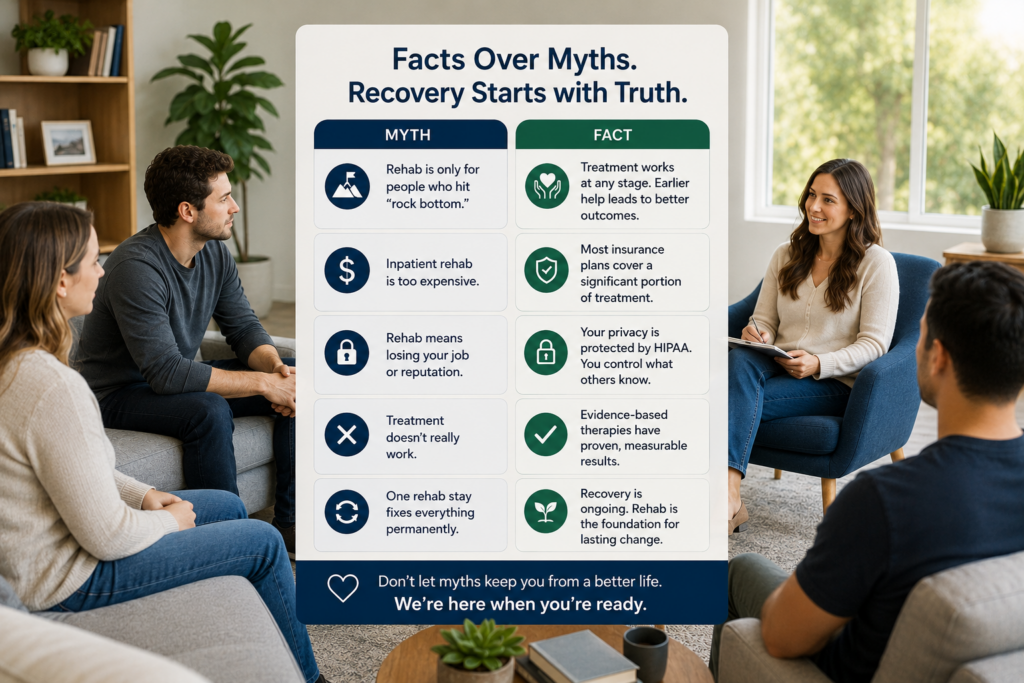
Most inpatient rehab myths fall into a handful of categories: cost, effectiveness, privacy, and who actually qualifies for treatment.
| Myth | Fact |
| Rehab is only for people who’ve hit “rock bottom” | Treatment works at any stage. Earlier intervention generally means a shorter, less complicated recovery process |
| Inpatient rehab is unaffordable | Most major insurance plans cover some or all of treatment. Verifying coverage takes minutes |
| Rehab means losing your job or reputation | HIPAA protects your privacy. Employers are not notified unless you choose to disclose |
| Treatment doesn’t really work | Evidence-based therapies like CBT and DBT have documented, measurable outcomes when treatment is followed through |
| One rehab stay fixes everything permanently | Recovery is ongoing. Inpatient care is the foundation, not the entire process |
Seeing these side by side makes the pattern clear. Most rehab myths hold up only until someone actually looks into how treatment works.
What Inpatient Rehab Actually Involves
Inpatient rehab starts with medical evaluation, not paperwork. A clinical team assesses physical health, substance use history, and any co-occurring mental health conditions before building a treatment plan.
Detox, if needed, comes first and is medically supervised. Withdrawal from alcohol, benzodiazepines, or opioids can carry real medical risk, which is exactly why supervised detox exists rather than trying to quit alone.
After stabilization, treatment shifts into structured therapy. At SCRC, that includes evidence-based approaches like CBT and DBT, trauma-focused work such as EMDR and Somatic Experiencing, and life skills training that carries into daily routines after discharge.
Programs run on structure deliberately. Set schedules, group sessions, individual therapy, and accountability build the kind of daily discipline that’s often missing during active addiction. Our team handles all of this in-house at our inpatient rehab program, rather than outsourcing pieces of care to outside providers.
The Truth About Rehab Cost and Insurance
The truth about rehab cost surprises most people who’ve never looked into it. Insurance plans from providers like Aetna, Cigna, and UHC frequently cover a significant portion of inpatient treatment, sometimes close to the full cost depending on the plan.
The mistake most people make is assuming they know their coverage without ever checking. A quick insurance verification with our admissions staff clarifies exactly what’s covered, no guesswork required.
Cost concerns are valid. Untreated addiction has its own cost though, in lost income, medical complications, and strain on relationships that often outweighs treatment expenses by a wide margin over time.
Who Actually Needs Inpatient Rehab?
There’s no single threshold that makes someone “qualify” for treatment. Certain signs, however, point clearly toward needing more structured care than outpatient support can provide.
Common warning signs include:
- Repeated failed attempts to cut back or quit on your own
- Withdrawal symptoms when substance use stops or slows
- Substance use interfering with work, relationships, or daily responsibilities
- Escalating use of a substance to get the same effect
- Co-occurring anxiety, depression, or trauma alongside substance use
- Loved ones expressing concern more than once
If two or more of these sound familiar, that’s typically enough reason to have a real conversation about treatment, not a reason to wait for things to get worse first.
Why Early Treatment Changes the Outcome
Waiting for a crisis point is one of the most damaging addiction treatment misconceptions still in circulation. Addiction is progressive. The longer it continues, the more it affects physical health, relationships, and the complexity of eventual treatment.
Early treatment tends to mean shorter, less complicated recovery. Physical dependence is less severe, relationships are more intact, and there’s more to rebuild from.
| Stage of Intervention | Typical Impact on Recovery |
| Early (before major life consequences) | Shorter treatment duration, fewer complications |
| Mid-stage (job or relationship strain) | Longer stabilization needed, more comprehensive care |
| Crisis point (health or legal consequences) | Extended treatment, higher medical risk during detox |
None of this means it’s ever “too late” to start. It means earlier is consistently better, and waiting rarely improves the odds.
What Admissions Actually Looks Like
The admissions process is simpler than most people expect, usually four steps from first call to first day of treatment.
- Initial call. A confidential conversation about your situation, no commitment required.
- Insurance verification. Our team checks your coverage and explains what’s included.
- Assessment. A clinical evaluation determines the right level of care, detox, inpatient, or otherwise.
- Admission. Arrival at one of our Southern California facilities, with a personalized treatment plan already in place.
Family involvement fits into this process too. Our team includes family group sessions as part of treatment, since addiction affects the whole household, not just the person using. You can start the admissions process with a call whenever you’re ready, even if that’s just to ask questions.
For those specifically searching for inpatient rehab in Orange County, our nearby North County San Diego facilities in Carlsbad and Cardiff By The Sea are within easy reach and offer the same level of in-house, continuity-of-care treatment.
Separate Rehab Myths from Facts with Trusted, Compassionate Care
Don’t let common inpatient rehab myths stop you or your loved one from getting the help you deserve. At Southern California Recovery Centers, we provide evidence-based inpatient treatment, medically supervised care, personalized recovery plans, and insurance verification to make the admissions process simple and stress-free. Take the first step toward lasting recovery with a team that’s here to support you every step of the way.
Verify Your Insurance & Speak with Our Admissions Team TodayFAQ
How do I know if I need inpatient rehab or outpatient treatment?
Inpatient care makes sense when substance use is severe, withdrawal risk is present, or your home environment doesn’t support recovery. A clinical assessment during admissions determines the right fit.
Will my insurance actually cover inpatient rehab?
Most major providers, including Aetna, Cigna, and UHC, cover some or all of treatment depending on your plan. Verifying coverage takes a few minutes with our admissions team.
Is rehab confidential? Will my employer find out?
Treatment is protected under HIPAA. Your employer is not notified unless you choose to disclose your treatment yourself.
How long does inpatient rehab typically last?
Most stays run 30, 60, or 90 days, depending on severity and progress. Your treatment team adjusts the timeline based on how you’re responding to care.
What happens during detox at the start of treatment?
Detox is medically supervised to manage withdrawal safely, particularly for alcohol, benzodiazepines, or opioids, where withdrawal can carry real medical risk.
Can my family be involved in my treatment?
Yes. Family group sessions and education are part of our program, since recovery tends to go better when the people around you understand what you’re going through.
Do I have to be at “rock bottom” to go to rehab?
No. Earlier treatment generally means a shorter, less complicated recovery. Waiting for a crisis isn’t a requirement, and it isn’t recommended.
What’s the difference between detox and inpatient rehab?
Detox manages the physical withdrawal process. Inpatient rehab follows detox with structured therapy, life skills, and a personalized treatment plan addressing the addiction itself.
Where are SCRC’s treatment facilities located?
Our facilities are based in Carlsbad and Cardiff By The Sea, in North County San Diego, serving clients across Southern California including nearby Orange County.
How do I get started if I’m not sure yet?
Call for a confidential conversation. No commitment is required, and our team can walk you through options, insurance, and next steps at your pace.
This content has been medically reviewed for accuracy by the clinical team at Southern California Recovery Centers. It is intended for informational purposes and does not replace individualized medical advice.
Final Thoughts
Inpatient rehab myths cost people time they don’t get back. The truth about rehab is more straightforward than the stories suggest: medical care, structured therapy, a personalized plan, and a team that stays with you through the process.
If you or someone you love is weighing treatment, reach out to Southern California Recovery Centers for a confidential conversation. Call (800) 410-6552 or contact our team today.