Objective
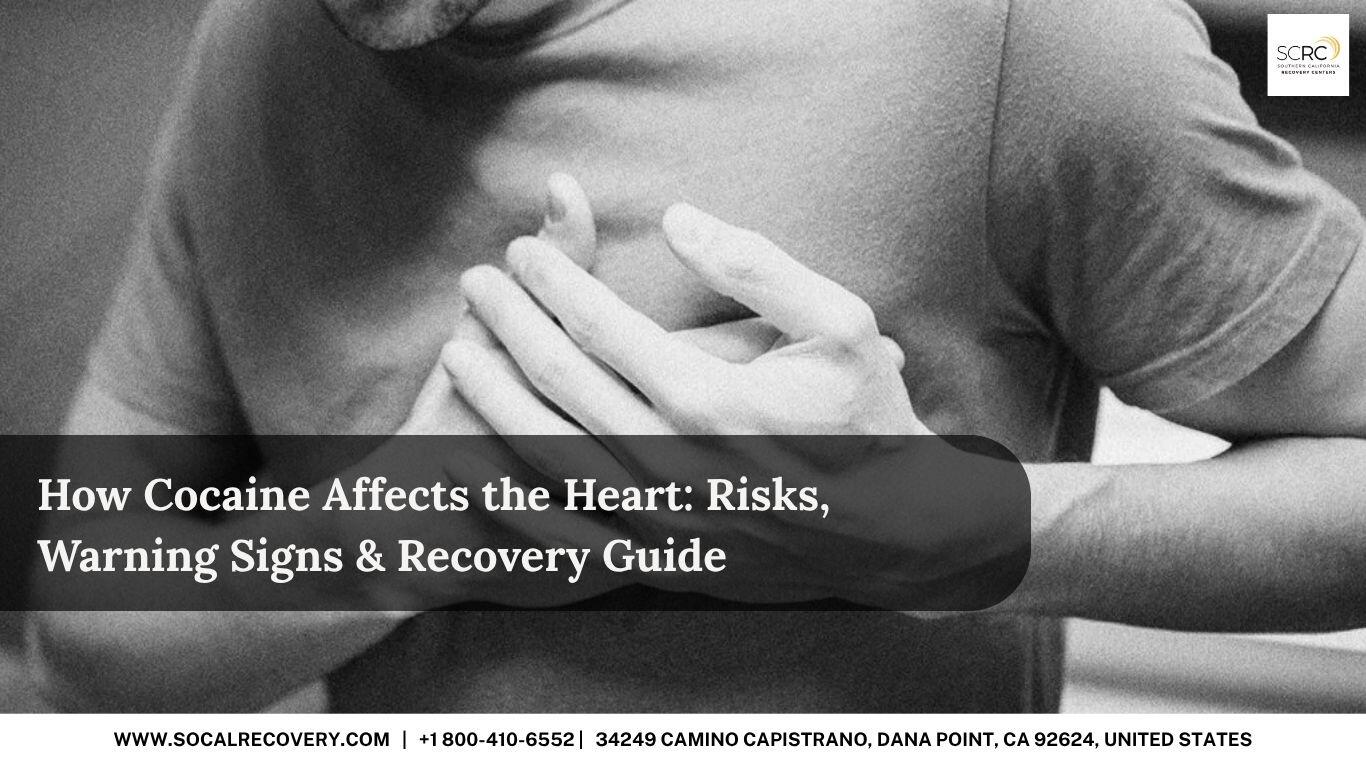
This blog explains what cocaine does to your heart, from the first use to years of regular use. You will learn the real risks, how to recognise a crisis, and what effective treatment looks like.
Key Takeaways
- Cocaine can place immediate stress on the heart, even after short-term or occasional use.”
- Heart problems from cocaine use can happen to young, healthy people with no warning.
- Even occasional cocaine use carries serious cardiac risk.
- Mixing cocaine with alcohol creates a more toxic compound inside your body.
- Cocaine addiction treatment programs in California offer the medical and psychological support needed for safe, lasting recovery.
Table of Contents
- The Moment Cocaine Enters Your Body
- How Cocaine Affects the Cardiovascular System
- Short-Term Cocaine Effect on the Heart
- Long-Term Cocaine Effect on the Heart
- Heart Problems From Cocaine Use
- Cocaine Overdose Symptoms, Know What to Look For
- Why Occasional Use Is Still Dangerous
- Mixing Cocaine With Alcohol or Other Drugs
- Treatment That Addresses Both Addiction and Heart Health
- FAQs
1. The Moment Cocaine Enters Your Body
Cocaine can affect the brain and body quickly, with the speed depending on how it is taken. Most people only notice the rush. What they do not notice is what is happening inside their chest at the same time.
Your heart rate surges, blood vessels tighten and blood pressure climbs. The cardiovascular system is placed under sudden strain, which can become dangerous when blood pressure, heart rate, and blood vessel constriction rise together. .
At Southern California Recovery Centers, we have worked with patients who experienced their first cocaine-related cardiac event with no prior heart history. Some people experience cocaine-related heart problems without knowing they had any previous heart risk.
Cocaine-related cardiac symptoms are serious enough that chest pain or breathing difficulty after use should be treated as urgent.”
2. How Cocaine Affects the Cardiovascular System
Cocaine blocks the reabsorption of norepinephrine in the brain. That one action sets off a chain reaction throughout the cardiovascular system.
Cocaine can trigger several cardiovascular effects, including:
- Blood vessels constrict sharply, cutting blood flow to the heart muscle.
- Heart rate accelerates, sometimes reaching dangerous levels.
- Blood pressure rises fast, straining artery walls.
- The heart works harder while simultaneously receiving less oxygen.
- Electrical signals controlling the heart rhythm get disrupted.
Each of these effects compounds the others. The heart is working at maximum effort while being starved of the blood supply it needs. This combination is one reason cocaine can create serious heart risk, even in people who do not use it regularly.
3. Short-Term Cocaine Effect on the Heart
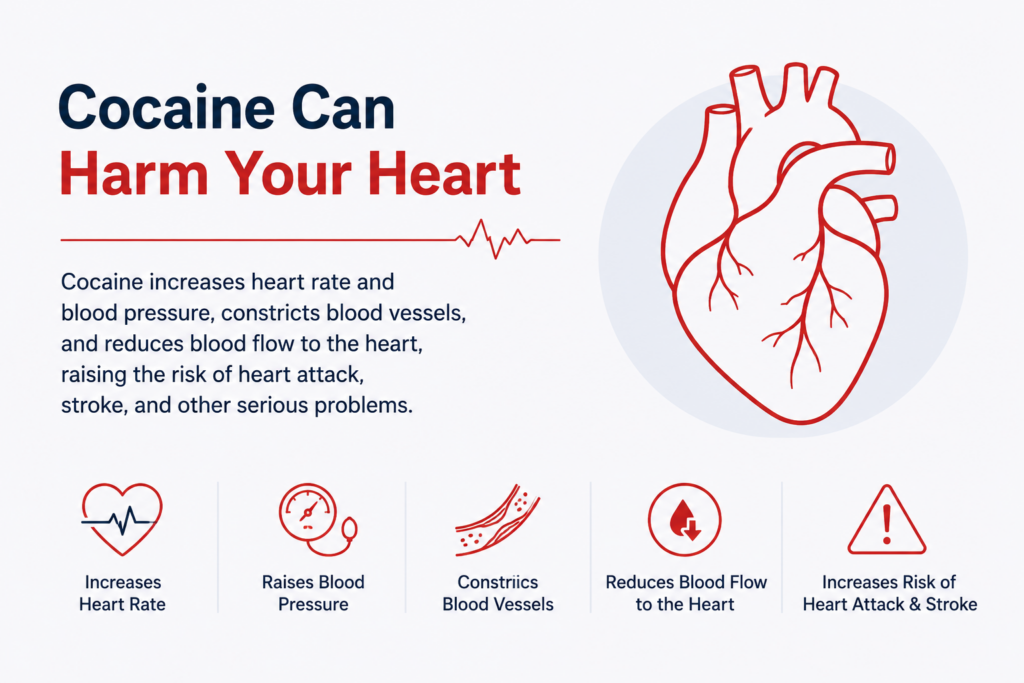
The short-term cardiovascular effects begin within seconds and can escalate quickly.
Chest pain is one of the most common immediate symptoms. It results from the arteries supplying blood to the heart going into spasm. This feels like pressure, squeezing, or tightness in the chest, and it is not something to ignore.
Arrhythmia, an irregular heartbeat, happens because cocaine disrupts the electrical system the heart uses to maintain a steady rhythm. The heart beats too fast, too slow, or erratically.
A sudden rise in blood pressure can place heavy strain on blood vessels and the heart. For someone with an underlying weakness in those walls, this alone can cause a rupture.
A heart attack can happen with a single use. Cocaine-induced coronary artery spasm can block blood flow long enough to cause permanent damage to the heart muscle. Cocaine-related heart attacks are well-documented in people in their twenties and thirties who have no prior cardiac diagnosis.
4. Long-Term Cocaine Effect on the Heart
Repeated use does not reduce the risk. It accumulates.
Cardiomyopathy develops when the heart muscle becomes permanently enlarged and weakened from sustained stress. The heart loses pumping efficiency, and the entire body feels the impact.
Coronary artery disease progresses faster in cocaine users. Every episode of arterial constriction causes small amounts of inflammation and damage. Over time, plaque builds up faster than it would otherwise, narrowing the arteries further.
Chronic high blood pressure becomes a fixed condition rather than a temporary spike. Sustained elevated pressure damages arterial walls steadily and quietly.
Heart failure is where many of these conditions lead. The heart cannot keep up anymore. Fatigue, breathlessness, fluid retention, and reduced physical capacity are the daily consequences.
Long-term cocaine use is associated with earlier and higher risk of several cardiovascular problems, including cardiomyopathy, coronary artery disease, and heart rhythm issues. That is not a scare tactic, it is what the medical data consistently shows.
5. Heart Problems From Cocaine Use
The most serious heart problems from cocaine use include:
| Condition | What It Means in Practice |
| Heart Attack | Blocked blood supply causes heart muscle to begin dying |
| Stroke | Blood supply to the brain is cut off or a vessel ruptures |
| Arrhythmia | Heart beats dangerously fast, slow, or irregularly |
| Heart Failure | Heart loses ability to pump enough blood for the body’s needs |
| Aortic Dissection | A tear in the main artery from the heart, frequently fatal |
| Endocarditis | Infection of the heart lining, more common with IV cocaine use |
Cocaine-related cardiac events can occur in younger adults, including people without a known heart diagnosis. Many had never been told they had a heart problem.
6. Cocaine Overdose Symptoms, Know What to Look For
A cocaine overdose moves fast. Recognising it early saves lives.
Cocaine overdose symptoms include:
- Chest pain or tightness that does not pass
- Breathing that becomes difficult or laboured
- Seizures or uncontrolled shaking
- Extreme panic or a sense that something is seriously wrong
- High fever and drenching sweat
- Confusion or inability to respond clearly
- A rapid or irregular heartbeat, the person can feel
- Loss of consciousness
If someone near you is showing these signs after cocaine use, call emergency services immediately. Do not wait for symptoms to settle. A cocaine overdose can become life-threatening quickly, so emergency help should be called immediately if serious symptoms appear
7. Why Occasional Use Is Still Dangerous for Your Heart
A common belief is that light or occasional use carries less risk. For most drugs, frequency does matter. With cocaine and the heart, the picture is more complicated.
Occasional use is still risky because serious cardiovascular reactions can happen even without regular use. Their heart’s response to the drug can actually be more intense, not less, because the body is not adapted to manage it.
Coronary artery spasm, dangerous clotting, and life-threatening arrhythmia have all been documented in people who used cocaine rarely. Heart risk does not disappear just because use is occasional. Even one occasion can trigger an irreversible event.
If there is an undiagnosed structural issue with your heart, a thickened wall, a weakened vessel, an electrical abnormality, cocaine can expose it in the worst possible way.
8. Mixing Cocaine With Alcohol or Other Drugs
Cocaine and alcohol together are more dangerous than either substance alone.
When both are present in the body at the same time, the liver produces a third compound called cocaethylene. When alcohol and cocaine are used together, the body can form cocaethylene, a compound linked with added cardiovascular risk.
Mixing cocaine with other stimulants, amphetamines, MDMA, stacks the cardiovascular load to levels the heart was not designed to sustain for any period of time.
Mixing cocaine with opioids creates a different but equally serious problem. The stimulant effects of cocaine and the depressant effects of opioids mask each other. People misjudge how impaired they are. They take more. By the time an overdose is obvious, it can be too late to reverse.
Combining cocaine with alcohol, opioids, or other stimulants can increase health risks and make emergencies harder to recognize.
9. Treatment That Addresses Both Addiction and Heart Health
Some heart function may improve after cocaine use stops, but recovery depends on the type and severity of damage.
Effective treatment looks like this:
- Medical Detox: withdrawal from cocaine carries real cardiovascular risk. Medically supervised detox monitors your heart, blood pressure, and vitals throughout the process. This is the safest way to stop.
- Inpatient Rehabilitation: residential treatment removes you from the environment and people connected to drug use. Structure and accountability support the early, hardest weeks of recovery.
- Cognitive Behavioural Therapy: CBT is one of the most evidence-based approaches for cocaine addiction. It works by identifying and changing the thought patterns that drive drug-seeking behaviour.
- Dual Diagnosis Treatment: cocaine use frequently co-occurs with anxiety, depression, or trauma. Treating both simultaneously produces better long-term outcomes than addressing addiction alone.
- Cardiac Monitoring: regular cardiovascular check-ups during and after treatment, track heart recovery, and catch any complications before they become emergencies.
- Relapse Prevention: building practical tools, support networks, and coping strategies that hold up when real-world pressure hits.
Southern California Recovery Centers build treatment around each individual. From medically managed detox to ongoing therapy and aftercare planning, the goal is to support safer withdrawal, continued treatment, relapse prevention, and long-term health. .
Enrolling in a cocaine addiction treatment program in California gives you access to the medical supervision, mental health care, and structured support that make lasting recovery possible. Seeking treatment is a practical health decision, especially when cocaine use has started affecting physical or mental well-being.
Cocaine can place serious strain on the heart, and getting help early can reduce further risk. Southern California Recovery Centers provides evidence-based, compassionate care for cocaine addiction, from the first day of detox to long-term recovery support. Reach out today. Early support can make treatment safer and easier to begin.
Protect Your Heart and Break Free From Cocaine Addiction
Cocaine can put tremendous stress on your heart, increasing the risk of heart attack, stroke, irregular heartbeat, and long-term cardiovascular damage—even after occasional use. Southern California Recovery Centers offers medically supervised detox, evidence-based addiction treatment, dual diagnosis care, and personalized recovery plans to help you overcome cocaine addiction while prioritizing your overall health and long-term wellness.
Speak With a Recovery Specialist TodayFAQs
Q1. Can cocaine cause a heart attack the first time someone uses it?
Yes. First-time users have no tolerance to cocaine’s cardiovascular effects. Heart attacks in people using cocaine for the first time have been documented medically. Having no history of heart problems does not eliminate this risk.
Q2. How does cocaine affect blood pressure specifically?
Cocaine causes the arteries to constrict while simultaneously making the heart beat faster. Blood is being pushed through narrower vessels at a higher speed. That combination drives blood pressure to dangerous levels very quickly, sometimes high enough to rupture blood vessels or cause a stroke.
Q3. What makes cocaethylene more dangerous than cocaine alone?
Cocaethylene forms in the liver when cocaine and alcohol are processed together. It is more cardiotoxic than cocaine, meaning it causes greater harm to heart tissue. It also stays in the body longer than cocaine, extending the window of cardiovascular risk well after the high has passed.
Q4. Can the heart heal after someone stops using cocaine?
Partial recovery is possible and
well-documented. Conditions like cardiomyopathy can improve significantly with sustained abstinence. However, structural damage from a heart attack or advanced coronary artery disease does not fully reverse. The sooner use stops, the better the outcome.
Q5. Is chest pain after cocaine use always a heart attack?
Not always, but it must always be treated as a potential cardiac emergency until ruled out by a doctor. Cocaine-induced chest pain can come from arterial spasm, elevated blood pressure, or a genuine heart attack. There is no safe way to distinguish these at home.
Q6. What should I do if someone around me is showing cocaine overdose symptoms?
Call emergency services immediately. Do not leave the person alone. Keep them calm if they are conscious. If they lose consciousness and stop breathing normally, begin CPR if you are trained. Do not give them anything to eat or drink. Time is critical, acting fast is the most important thing you can do.