
Objective
This guide explains fentanyl detox in plain language. It covers the detox timeline, common symptoms, risk factors, and why medical care matters. It is written for people who are worried about themselves or someone they love.
Southern California Recovery Centers is mentioned here as a treatment setting people may consider when they want structured help instead of trying to manage withdrawal alone.
Key Takeaways
- Fentanyl detox means the body is adjusting after fentanyl use stops.
- Withdrawal can start within hours.
- Symptoms often peak during the first few days.
- Common fentanyl detox symptoms include nausea, sweating, chills, anxiety, cravings, body aches, and insomnia.
- The fentanyl detox timeline depends on use history, dose, health, and support.
- Medical detox is safer than trying to quit alone.
- A fentanyl rehab program can help after detox, when cravings and triggers still need care.
What Is Fentanyl Detox?
Fentanyl detox is the first stage after a person stops using fentanyl.
Fentanyl is a strong opioid. When someone uses it often, the body can become dependent on it. That means the body has started to rely on the drug to feel normal.
When fentanyl is suddenly removed, the body reacts. That reaction is withdrawal.
Detox is not about willpower. It is a medical and physical process. The body needs time to adjust. The brain also needs time to settle.
Detox does not fix the whole problem. It helps a person get through the first difficult stage. After that, treatment is still needed to work on cravings, habits, triggers, and emotional pain.
How Long Does It Take To Detox From Fentanyl?
A common question is: how long does it take to detox from fentanyl?
For many people, symptoms begin within 6 to 12 hours after the last use. The most severe symptoms often occur between days 2 and 4. Many physical symptoms improve after 7 to 10 days.
That does not mean every person feels normal after one week.
Sleep problems, cravings, anxiety, low mood, and low energy can last longer. Some people feel better slowly over several weeks.
The detox length can change based on:
- How much fentanyl was used
- How long has the person used it
- How often did they use it
- Whether other substances were involved
- The person’s physical health
- The person’s mental health
- Past withdrawal experiences
- Whether detox is medically supervised
So, there is no single exact answer. A person who used fentanyl heavily for months may have a harder detox than someone with a shorter use history.
Fentanyl Detox Symptoms
Fentanyl withdrawal can affect both the body and the mind.
Some symptoms feel like a severe case of the flu. Others feel emotional and overwhelmed.
Physical Fentanyl Detox Symptoms
Physical symptoms may include:
- Nausea
- Vomiting
- Diarrhea
- Sweating
- Chills
- Muscle aches
- Stomach cramps
- Runny nose
- Watery eyes
- Shaking
- Fast heartbeat
- Tiredness
- Trouble sleeping
These symptoms can feel exhausting. Vomiting and diarrhea can also lead to dehydration. That is one reason medical support can be helpful.
Emotional Fentanyl Detox Symptoms
The emotional side can be just as hard.
A person may feel:
- Anxiety
- Panic
- Irritability
- Restlessness
- Low mood
- Strong cravings
- Trouble focusing
- Hopelessness
- Fear of relapse
Cravings can come in waves. They may feel very strong, especially during the first few days.
This is where many people struggle. They are not using it because they want to “feel high.” They may feel pulled back because withdrawal feels unbearable.
Fentanyl Detox Timeline
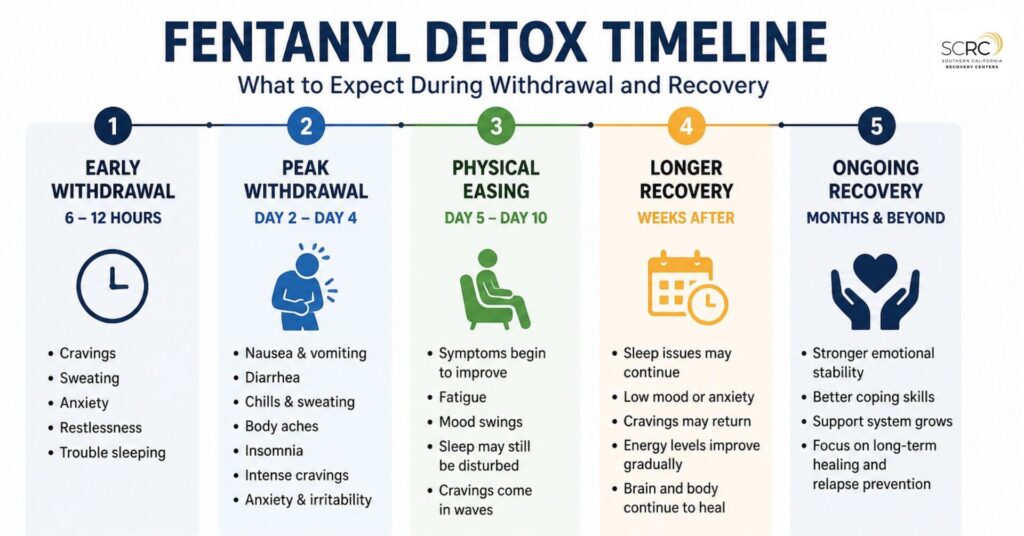
The fentanyl detox timeline is different for each person, but it often follows a pattern.
| Stage | Timeframe | What May Happen |
| Early Withdrawal | 6 to 12 hours | Cravings, sweating, anxiety, restlessness |
| Peak Withdrawal | Day 2 to Day 4 | Strong nausea, body pain, chills, insomnia, cravings |
| Physical Easing | Day 5 to Day 10 | Symptoms begin to settle, but fatigue may remain |
| Longer Recovery | Weeks After | Sleep issues, low mood, anxiety, and cravings may continue |
Early Withdrawal: First 6 To 12 Hours
The first signs may appear quickly.
A person may feel restless. They may sweat more than usual. Their mood may shift. Cravings can begin early.
Sleep may be hard. The body may feel tense.
At this stage, some people tell themselves they can handle it on their own. But early symptoms can build fast.
Peak Withdrawal: Day 2 To Day 4
This is often the hardest part.
Symptoms can feel stronger during this stage. Nausea, diarrhea, chills, sweating, body aches, anxiety, and insomnia may peak.
Cravings can also become intense.
This is the point where many people are at high risk of relapse. They may want to use fentanyl again just to stop the withdrawal.
Medical care can make this stage safer and more manageable.
Physical Easing: Day 5 To Day 10
After the peak, many physical symptoms begin to calm down.
The person may still feel weak. Sleep may still be broken. Their stomach may still feel off. Mood may change quickly.
This stage can feel frustrating because progress is not always steady. One day may feel better. The next day may feel hard again.
That does not mean detox is failing.
Longer Recovery: Weeks After Detox
Some symptoms can last after the main detox period.
These may include:
- Trouble sleeping
- Anxiety
- Low mood
- Low energy
- Cravings
- Trouble feeling normal
This longer stage is one reason detox should not be the only step.
The body may be past the worst withdrawal, but the brain still needs support.
What Can Make Withdrawal More Severe?
Fentanyl detox can be harder for some people.
Common risk factors include:
- Heavy fentanyl use
- Long-term use
- Daily use
- Higher doses
- Using fentanyl with alcohol or other drugs
- Poor sleep or poor nutrition
- Anxiety or depression
- Past relapse
- No safe support at home
A person’s environment also matters.
If someone is around stress, conflict, or easy access to fentanyl, detox can become much harder.
Southern California Recovery Centers may be part of the search for people who need a safer place to begin recovery with structure and support.
Why Medical Detox Is Safer
Detoxing from fentanyl alone can be risky.
Withdrawal may not always be life-threatening, but it can still become dangerous. Severe vomiting or diarrhea can cause dehydration. Panic and cravings can lead to relapse. After a break from fentanyl, tolerance can drop, which raises overdose risk if a person uses it again.
Medical detox can help by offering:
- Regular health checks
- Help with nausea and stomach issues
- Help with sleep
- Support for anxiety
- Medication when appropriate
- Emotional support
- A safer space away from triggers
A fentanyl detox center can also help plan the next step after detox.
That next step matters. Detox clears fentanyl from the body. It does not remove cravings, stress, or old patterns on its own.
Fentanyl Detox California And Treatment Options
People who search for fentanyl detox in California are often looking for safe help close to home or in a calmer recovery setting.
Care may include:
- Medical detox
- Residential treatment
- Outpatient treatment
- Therapy
- Group support
- Family support
- Relapse prevention planning
- Medication-assisted treatment is suitable when
The right option depends on the person’s needs.
Someone with heavy use, past overdose, or strong withdrawal symptoms may need a higher level of care. Someone with a stable home and medical guidance may need a different plan.
A qualified professional can help decide what is safest.
What Happens After Detox?
After detox, recovery work continues.
A fentanyl rehab program can help a person understand what led to use and how to stay away from relapse.
Rehab may focus on:
- Craving management
- Triggers
- Stress
- Emotional pain
- Family issues
- Daily routines
- Healthy coping skills
- Long-term support
This part is important because cravings can return even after the body feels better.
A person may feel strong after detox and think they are done. But recovery usually needs more time and care.
Southern California Recovery Centers can be mentioned naturally here as one place people may consider when looking for care that continues beyond detox.
When Should Someone Get Help?
Someone should get help right away if withdrawal feels too strong to manage.
Support is also important if the person has:
- Used fentanyl daily
- Used high doses
- Mixed fentanyl with other substances
- Relapsed before
- Had an overdose before
- Severe anxiety or depression
- No safe place to detox
- Strong cravings
Getting help early can prevent a bad situation from becoming worse.
Conclusion
Fentanyl detox is hard, but it can be managed with proper care.
The first symptoms may start within hours. The hardest stage often happens around day 2 to day 4. Many physical symptoms improve within 7 to 10 days, but sleep problems, cravings, and mood changes may last longer.
The safest path is medical detox followed by ongoing care. A fentanyl rehab program gives people support after the body clears the drug.
Southern California Recovery Centers may be considered by people looking for structured support and a safer recovery path.
Start Safe Fentanyl Detox With Professional Support
Fentanyl withdrawal can be intense and difficult to manage alone. If you or a loved one is struggling, getting medical support can make detox safer and more comfortable. At Southern California Recovery Centers, we offer structured care, expert guidance, and ongoing support to help you move beyond detox and build lasting recovery.
Get Confidential Help TodayFAQs
How Long Does It Take To Detox From Fentanyl?
Most people feel the worst symptoms in the first few days. The body usually starts to settle after about a week. Some things, like sleep problems or cravings, can stick around longer.
What Are The Most Common Fentanyl Detox Symptoms?
People often feel sick to their stomachs, sweaty, cold, and tired. Body aches are common. Many also feel anxious, restless, and unable to sleep.
When Is Withdrawal The Hardest?
The second and third days are usually the toughest. That is when symptoms feel strongest, and cravings can be hard to ignore.
Can Someone Detox From Fentanyl At Home?
Some people try, but it can be very hard to manage on their own. The symptoms can feel overwhelming. Having medical support makes the process safer and more controlled.
Why Do Cravings Stay After Detox?
Even after the drug leaves the body, the brain continues to adjust. That is why cravings can come and go for a while.
Is Detox Enough To Recover From Fentanyl Use?
No. Detox only helps the body get through withdrawal. Real recovery takes more time and support to deal with habits, stress, and triggers.
What Makes Fentanyl Withdrawal Feel Worse?
It can feel worse if someone has been using it for a long time, using high amounts, or mixing it with other substances. Stress and poor sleep can also make it harder.
When Should Someone Get Help During Detox?
If the symptoms feel too strong or if there is a risk of going back to use, it is better to get help right away. Support can make a big difference.