Objective: Help people who’ve finished, or are about to finish, cocaine detox understand why therapy is the part of recovery that actually holds long-term, and connect them with Southern California Recovery Centers (SCRC) for the next step.
Key Takeaways
- Detox gets cocaine out of the body. It doesn’t touch cravings, triggers, or whatever was driving the use in the first place. That work belongs to therapy for cocaine addiction.
- Skip structured therapy after detox and relapse risk stays high, because the habits and emotional patterns underneath the addiction are still fully intact.
- CBT, individual counseling, group therapy, family therapy, and relapse prevention planning form the core of treatment, usually layered together rather than used one at a time.
- Therapy teaches specific things: how to sit with a craving without acting on it, how to spot a trigger three steps before it becomes a decision, how to rebuild a relationship you damaged.
- SCRC runs personalized cocaine addiction therapy out of its Carlsbad and Cardiff-by-the-Sea locations in North County San Diego, plus its Dana Point facility in Orange County.
Most people picture withdrawal as the hard part. The sweats, the crash, the days of feeling like garbage. And it is hard. But talk to anyone six months sober, and they’ll usually tell you the harder moment came later, sitting in traffic on some random Tuesday when a song came on and pulled them straight back to an apartment they hadn’t thought about in weeks.
Detox handles the chemistry. It clears cocaine from your system and gets you through the physical crash that follows. What it can’t do is retrain the part of your brain that still reacts to that song, or break the habit of reaching for your phone when the second stress hits.
That gap is exactly what therapy for cocaine addiction is built to close. It’s also the part of recovery people tend to underestimate, right up until it turns out to be the part that decides whether sobriety sticks.
Why Detox Alone Doesn’t Treat Cocaine Addiction
Detox treats withdrawal. Addiction is a separate problem, and mixing the two up is one of the more common reasons people relapse in the first few months after getting sober.
Cocaine withdrawal is mostly psychological, not physically dangerous the way alcohol or opioid withdrawal can be. Exhaustion, low mood, cravings, disrupted sleep. These usually peak within the first week and taper off over the following weeks. Once the body settles, though, the mind is nowhere near finished.
Cravings don’t respect a calendar. A person can go three months without a single urge to use, then get hit hard by one out of nowhere because of a stressful phone call or a familiar street corner. Without a cocaine detox center california patients trust to hand them off into real aftercare, that stretch between physical stabilization and actual psychological readiness is where relapse tends to happen.
Think of it this way: detox turns down the volume on withdrawal. Therapy teaches you what to do with the quiet that’s left over.
What Does Therapy for Cocaine Addiction Actually Involve?
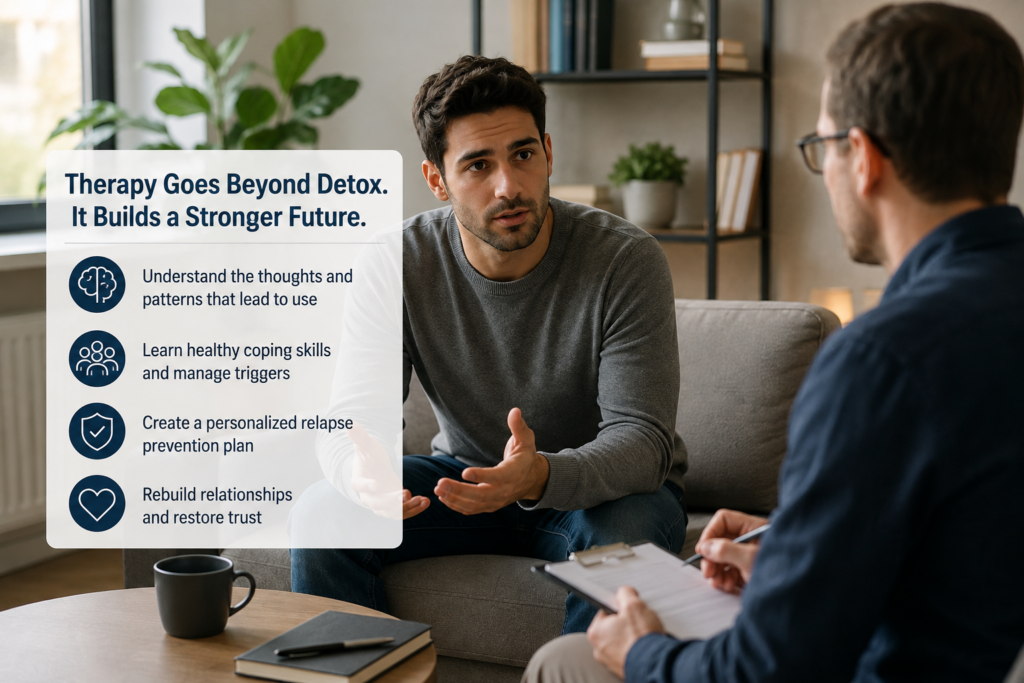
Therapy after detox is about finding the specific patterns and circumstances that led to using cocaine, then building something different to put in their place.
It isn’t a single conversation, and it isn’t a worksheet you fill out once. It’s an ongoing process, usually a combination of one-on-one sessions, group work, and often family involvement, each one chipping away at a different piece of the problem. A good counselor doesn’t just ask how someone’s feeling that week. They’ll walk through the ten minutes right before a person would normally use, minute by minute, to figure out where the pattern actually starts.
A typical course of cocaine addiction therapy usually includes:
- An initial assessment covering personal triggers, any co-occurring mental health conditions, and gaps in support at home
- Individual counseling to work through what’s underneath the addiction, often trauma, chronic stress, or anxiety and depression that never got treated
- Group therapy, which breaks the isolation a lot of people don’t realize they’ve built around themselves
- Family sessions to start repairing trust that active addiction usually wears down
- A relapse prevention plan built specifically around that person’s own high-risk situations, not a generic template
At SCRC, this starts with an assessment from the in-house clinical team rather than a revolving door of outside contractors. That continuity actually matters. A counselor who’s followed someone’s case since day one notices the small shifts a brand-new face would miss completely.
How Does Therapy Address Cravings and Triggers?
Therapy works on cravings by teaching people to catch the warning signs early, before a craving turns into a decision, and giving them something concrete to do in that narrow window.
Cocaine cravings tend to follow a pattern most people don’t know about going in. They’re intense, but they’re also short. Most peak and fade within 15 to 30 minutes if nothing feeds them further. The trouble is, nobody tells someone that in the middle of their first bad craving, so it feels endless and impossible to sit through.
Triggers therapy typically helps someone name and manage:
- Specific people, places, or routines tied to past use
- Emotional states like boredom, loneliness, anger, or even celebration
- Money stress, or conflict with a partner or parent
- Being around alcohol or other substances that loosen inhibition
- Anniversaries, holidays, or a stretch of unusually high pressure at work
CBT does most of the heavy lifting here. The idea is simple even if the practice takes time: catch the automatic thought right before a craving hits, something like “I can’t sit through this,” and replace it with something closer to the truth. Done enough times, that shifts the automatic response itself, not just the willpower a person’s relying on to fight it.
What Therapy Approaches Are Used in Cocaine Recovery?
No single therapy type covers everything cocaine addiction recovery needs. Most treatment plans layer a few approaches together, since cravings, damaged relationships, and unresolved trauma each call for a different kind of work.
| Therapy Type | What It Targets | Typical Format |
| Cognitive Behavioral Therapy (CBT) | Automatic thoughts that lead into cravings and use | Individual, weekly |
| Individual Counseling | Underlying trauma, anxiety, depression, personal history | Individual, ongoing |
| Group Therapy | Isolation, accountability, shared coping strategies | Group, multiple times weekly |
| Family Therapy | Trust, communication, enabling patterns at home | Family sessions, periodic |
| Relapse Prevention Planning | High-risk situations, specific coping responses | Individual and group, ongoing |
SCRC also brings in trauma-focused work like EMDR, Seeking Safety, and Somatic Experiencing for clients whose cocaine use is tangled up with unresolved trauma. Worth pointing out the distinction here: standard CBT reshapes the thought pattern. Trauma work goes after why that pattern formed to begin with, which is a different job entirely.
How Does Therapy Help Rebuild Life After Addiction?
Therapy rebuilds what active cocaine use wears down. Sobriety by itself doesn’t automatically repair a damaged marriage, a resume with gaps, or a nervous system that’s been running on adrenaline for years.
Where this work actually shows up:
- Coping skills. Handling stress, conflict, and disappointment without reaching for a substance
- Mental well-being. Treating the anxiety or depression that often runs alongside cocaine use disorder, not after it
- Relationships. Rebuilding trust with a partner or family member through honest, consistent communication over time
- Daily structure. Replacing the chaos of active use with routine, accountability, and something to work toward
- Relapse risk. Lowering the odds of returning to use through repeated skill practice, not a single lesson learned once and filed away
Here’s a pattern that shows up often: someone finishes a 30-day detox and residential stay feeling physically solid, then goes home to the same apartment, the same friend group, the same 2 a.m. loneliness, with zero new tools for any of it. Weeks later, the same triggers that led to use the first time are right back in front of them. Therapy is what changes that outcome, because it hands someone a different move to make before they’re standing in that exact moment again.
What Does Personalized Cocaine Treatment After Detox Look Like?
Real cocaine treatment after detox gets built around the individual. It doesn’t get handed out as a fixed program everyone finishes on the same timeline.
Two people can both be in cocaine recovery and need almost opposite things. One’s managing PTSD from a deployment years ago. Another’s running a company and terrified their board finds out. A generic 30-day script doesn’t serve either one particularly well.
A plan built around the individual usually adjusts for:
- Co-occurring mental health conditions that need integrated, not separate, treatment
- Family dynamics, and how much involvement actually helps versus how much someone wants
- Work and life circumstances that shape what realistic aftercare looks like
- What’s been tried before, and what didn’t work the last time
At SCRC’s Carlsbad and Cardiff-by-the-Sea locations, both in North County San Diego, and its Dana Point facility in Orange County, treatment plans get built around these details instead of a standard track everyone follows. If a confidential assessment sounds like the right next step to figure out what a plan should actually look like, the admissions team can talk through it with no obligation attached.
Recovery doesn’t wrap up when a program ends, either. Continued support, whether that’s an alumni group, ongoing outpatient therapy, or sober living, is what protects the ground gained during active treatment.
Build Lasting Recovery With Personalized Cocaine Addiction Therapy
Detox is only the beginning of recovery. At Southern California Recovery Centers, our personalized therapy for cocaine addiction helps you manage cravings, overcome triggers, and build the skills needed for lasting recovery. Take the next step with compassionate, evidence-based care.
Schedule a Confidential AssessmentFAQ
What is therapy for cocaine addiction, exactly?
Structured, ongoing treatment, usually a mix of individual counseling, group sessions, and often family therapy, aimed at the thoughts, triggers, and underlying issues driving cocaine use. Not just stopping the drug itself.
Why isn’t detox enough on its own?
Detox gets a person through physical withdrawal. Cravings and the behavioral patterns behind them usually stick around well after the body’s stabilized, and that’s exactly what therapy is there to handle.
How long do cravings for cocaine usually last after detox?
The worst of withdrawal typically fades within a few weeks. Cravings themselves can resurface months later, triggered by stress or a specific situation, which is why relapse prevention doesn’t end when detox does.
How long does cocaine addiction therapy usually take?
No single answer fits everyone. Some people start with 30, 60, or 90 days of structured treatment and move into ongoing outpatient therapy or support groups after that.
Can family members get involved in cocaine addiction treatment?
Yes, and most programs actively want them involved. Family sessions help rebuild the trust and communication that active addiction tends to wear thin, and SCRC builds that into the process rather than treating it as optional.
Does insurance cover therapy for cocaine addiction?
Often, yes, though coverage varies quite a bit by plan and provider. SCRC’s admissions team will verify your specific benefits before you’re asked to commit to anything.
What happens if someone relapses after finishing therapy?
Relapse doesn’t erase the work already done. A solid relapse prevention plan includes actual steps to take if a slip happens, and most treatment centers, SCRC included, focus on getting someone back into care quickly instead of treating it as starting from zero.
Is cocaine addiction recovery possible without residential treatment?
For some people, yes, especially with strong outpatient therapy and a stable home situation. Others do better starting with residential care first. It really comes down to severity of use, any co-occurring conditions, and what someone’s home environment looks like.
Getting Started
Detox gets you sober. Therapy is what keeps you that way, by giving you tools you didn’t have the first time old triggers and cravings came knocking.
Southern California Recovery Centers build personalized therapy plans for people at every stage of cocaine addiction recovery, from those just off detox to those working through longer-term outpatient care. Call (800) 410-6552 for a confidential assessment, or reach out to admissions to see what a plan built around your actual situation could look like.
Medical Disclaimer: This article is for general educational purposes only and is not a substitute for professional medical or psychiatric advice, diagnosis, or treatment. Cocaine addiction and withdrawal can involve serious physical and psychological risks, and treatment needs vary from person to person. Always consult a qualified healthcare provider before making decisions about detox, therapy, or any addiction treatment plan. If you or someone you know is in immediate danger or experiencing a medical emergency, call 911 or go to the nearest emergency room.