
Objective
Stopping Lexapro can feel confusing. Some people feel fine. Others feel physical and emotional changes after lowering the dose or stopping too fast. These changes are often called Lexapro withdrawal symptoms or antidepressant discontinuation symptoms.
This blog explains what may happen after stopping Lexapro, how long symptoms may last, and when it is time to speak with a doctor. It is for general education only. It is not a replacement for medical advice. Socal Recovery provides clear, safe information to help people understand medication changes.
Key Takeaways
- Lexapro should not be stopped suddenly without medical guidance.
- Withdrawal symptoms may include dizziness, nausea, sleep changes, mood changes, and “brain zaps.”
- Symptoms often begin within a few days after stopping or reducing the dose.
- Some people feel better within one to two weeks, but others may need more time.
- Lexapro has a half-life of about 27 to 33 hours, and most of it is eliminated from the body in about 6 days.
- A slow taper can lower the chance of difficult symptoms.
Table Of Contents
- What Is Lexapro?
- What Happens After Stopping Lexapro?
- Common Lexapro Withdrawal Symptoms
- Side Effects From Stopping Lexapro
- Lexapro Withdrawal Symptoms Timeline
- How Long Does Lexapro Stay In Your System After Stopping?
- Is Lexapro addictive?
- Tips For Safe Tapering
- When To Consult A Doctor
- FAQs
- Final Thoughts
What Is Lexapro?
Lexapro is the brand name for escitalopram. It is a prescription antidepressant. It belongs to a group of medicines called SSRIs. These medicines are often used for depression and anxiety.
Lexapro works by helping balance serotonin activity in the brain. Serotonin is linked with mood, sleep, appetite, and emotional balance.
When someone takes Lexapro for a while, the body becomes accustomed to its effects. If the medicine is stopped suddenly, the body may need time to adjust. That adjustment period can cause uncomfortable symptoms.
What Happens After Stopping Lexapro?
After stopping Lexapro, the body slowly clears the medicine. At the same time, the brain and nervous system adjust to the change.
This does not mean something is “wrong” with the person. It means the body is reacting to a sudden or fast change.
Some people notice only mild symptoms. Others feel symptoms that affect sleep, work, school, mood, or daily comfort.
The risk may be higher if someone:
- Stops Lexapro suddenly
- Reduces the dose too fast
- Took Lexapro for a long time
- Was taking a higher dose
- Has had withdrawal symptoms before
- Has ongoing anxiety or depression symptoms
This is why a doctor-guided taper is safer than stopping on your own.
Common Lexapro Withdrawal Symptoms
Lexapro withdrawal symptoms can affect the body, mood, sleep, and thinking. Cleveland Clinic lists common antidepressant discontinuation symptoms such as insomnia, nausea, flu-like symptoms, dizziness, and mood changes.
Common symptoms may include:
- Dizziness
- Headache
- Nausea
- Upset stomach
- Tiredness
- Sleep trouble
- Vivid dreams
- Irritability
- Anxiety
- Low mood
- Trouble focusing
- Sweating
- Shaking
- Flu-like feelings
- Tingling feelings
- “Brain zaps,” or sudden electric-like sensations
Not everyone gets all of these symptoms. Some people only feel one or two. Others may feel several at once.
Side Effects From Stopping Lexapro
The side effects from stopping Lexapro can feel different from the side effects people feel while taking the medicine.
For example, a person may feel fine while taking Lexapro. Then, after stopping, they may feel dizzy, emotional, restless, or unable to sleep.
Physical side effects may include:
- Nausea
- Headache
- Dizziness
- Muscle aches
- Stomach discomfort
- Tiredness
- Sweating
- Light sensitivity
Emotional side effects may include:
- Anxiety
- Irritability
- Tearfulness
- Mood swings
- Restlessness
- Low motivation
- Return of depression or anxiety symptoms
It can be hard to tell the difference between withdrawal and a return of the original condition. Timing can help. Withdrawal often starts soon after reducing or stopping the medicine. A relapse may develop more slowly. A doctor can help tell the difference.
Socal Recovery understands that medication changes can feel stressful, especially when symptoms affect mood and daily life.
Lexapro Withdrawal Symptoms Timeline
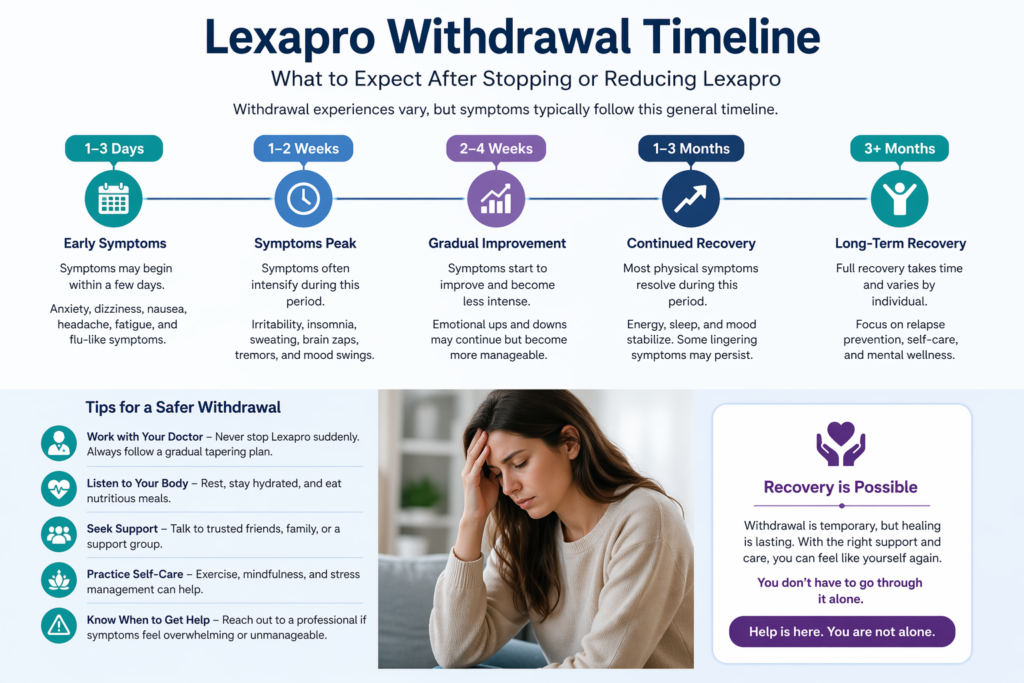
The timeline is not the same for everyone. Still, many people follow a general pattern.
Some medical sources note that antidepressant discontinuation symptoms often begin within a few days and may last one to two weeks, though longer symptoms can happen in some cases.
How Long Does Lexapro Stay In Your System After Stopping?
Many people ask, how long does Lexapro stay in your system after stopping?
Lexapro has a half-life of about 27 to 33 hours. A half-life means the time it takes for the body to remove about half of the medicine. Based on this, most of the Lexapro may be cleared from the body in about 6 days.
But symptoms can last longer than the medicine stays in the body. That is because withdrawal is not only about the drug leaving. It is also about the nervous system adjusting after the change.
So, someone may still feel symptoms after most of the medicine has cleared.
Is Lexapro addictive?
Many people ask, “Is Lexapro addictive?
Lexapro is not considered addictive in the same way as substances that cause cravings or compulsive use. But the body can become used to it. That is why stopping suddenly can cause withdrawal-like symptoms.
This difference matters.
Dependence means the body has adjusted to the medicine. Withdrawal can happen when the medicine is removed too quickly. Addiction usually involves cravings, loss of control, and continued use despite harm.
Still, anyone struggling with medication misuse, fear of stopping, or mixed substance use should speak with a professional. In some cases, prescription pill addiction treatment may be needed when medication use becomes unsafe or hard to control.
Tips For Safe Tapering
Tapering means lowering the dose slowly. This gives the body time to adjust. It can also lower the chance of strong withdrawal symptoms.
Do not stop Lexapro suddenly unless your doctor tells you to. A sudden stop can make symptoms harder to manage.
A safer taper usually starts with a simple conversation with your doctor. Tell them how long you have been taking Lexapro, what dose you take, and why you want to stop. Also, tell them if you have had anxiety, depression, panic attacks, sleep problems, or withdrawal symptoms before.
Helpful steps may include:
- Follow the taper plan your doctor gives you.
- Do not lower the dose faster because you feel impatient.
- Keep a short daily note of your mood, sleep, appetite, and energy.
- Tell your doctor if dizziness, nausea, brain zaps, or mood changes become severe.
- Avoid skipping doses unless your doctor has told you to.
- Keep a steady sleep routine during the taper.
- Eat regular meals and drink enough water.
- Avoid alcohol or other substances that may make your mood or sleep worse.
- Ask someone you trust for support.
- Keep therapy appointments if you are already in therapy.
Some people can taper in a few weeks. Others need longer. That does not mean anything is wrong. It only means the body needs a slower pace.
A good taper should feel manageable. If symptoms become too strong, the plan may need to be adjusted by a doctor.
When To Consult A Doctor
Talk to a doctor before stopping Lexapro. Also, speak with a doctor if symptoms appear after lowering the dose.
Get medical help if you have:
- Severe dizziness
- Chest pain
- Confusion
- Strong mood changes
- Severe sleep problems
- Panic symptoms that feel unmanageable
- Symptoms that keep getting worse
- Symptoms that last longer than expected
- Thoughts that make you feel unsafe
Young people and anyone with a history of severe depression should be watched more closely during medication changes. The FDA label for Lexapro notes that patients should be monitored for worsening mood and unusual behavior changes during dose changes.
You do not have to wait until symptoms become severe. Early support can prevent a harder situation.
Get Safe Support for Lexapro Withdrawal and Medication Changes
If Lexapro withdrawal symptoms feel overwhelming or confusing, professional guidance can make the process safer and more comfortable. Our team provides personalized care, tapering support, and evidence-based treatment to help you regain stability and peace of mind.
Speak With a Recovery Specialist TodayFAQs
1. What Are Common Lexapro Withdrawal Symptoms?
Common Lexapro withdrawal symptoms can include dizziness, nausea, headache, sleep trouble, tiredness, mood swings, anxiety, irritability, and brain zaps. Some people also feel flu-like symptoms. Not everyone has the same experience.
2. How Soon Do Symptoms Start After Stopping Lexapro?
Symptoms may start within a few days after stopping or lowering the dose. For some people, they appear faster. For others, they build slowly over the first week.
3. How Long Do Side Effects From Stopping Lexapro Last?
The side effects from stopping Lexapro may last a few days or a few weeks. Some people feel better quickly. Others need more time, especially if they stopped suddenly or had been taking Lexapro for a long time.
4. How Long Does Lexapro Stay In Your System After Stopping?
Many people ask, how long does Lexapro stay in your system after stopping? Most of the medicine may be eliminated from the body in about 6 days. But symptoms can last longer because the brain and nervous system may still be adjusting.
5. Is Lexapro Addicting?
It is a common concern. Lexapro is not usually considered addictive in the same way as drugs that cause cravings. But the body can get used to it. That is why stopping too fast can cause withdrawal symptoms.
6. When Should I Call A Doctor About Lexapro Withdrawal?
Call a doctor if symptoms are severe, last longer than expected, or make daily life difficult. Get help right away if you feel unsafe, very confused, unable to sleep for several nights, or if your mood becomes much worse.
Final Thoughts
Stopping Lexapro is not something to rush. Even if you feel ready, your body may still need time to adjust.
Some symptoms can be mild. Others can feel upset. Dizziness, sleep problems, mood changes, nausea, and brain zaps can make normal days harder. This is why a doctor-guided taper matters.
It is also important to pay attention to your mood. Sometimes symptoms are part of withdrawal. Sometimes anxiety or depression may come back. A doctor can help you understand what is happening and what to do next.
You do not have to figure it out alone. Socal Recovery can offer support when medication changes, mental health symptoms, or substance concerns begin to feel difficult to manage.
Take the next step safely. Talk to a professional before stopping Lexapro or changing your dose.