Key Takeaways
- Fentanyl addiction recovery begins with medical detox, not willpower. Fentanyl withdrawal can turn dangerous fast without supervision.
- Symptoms usually start 6 to 12 hours after the last dose and peak around day 2 to 4.
- Fentanyl addiction treatment works far better when detox is followed by residential or outpatient care instead of standing alone.
- Buprenorphine and other medication-assisted treatment options cut relapse risk during the fentanyl recovery process.
- SCRC verifies insurance directly, often within the same day, so cost isn’t a mystery before you commit.
- Ninety days of structured care beats 30 days on almost every outcome measure researchers track.
- Recovering from fentanyl addiction goes better when family gets involved, not left out.
A mother in Carlsbad finds a pill bottle in her son’s room that isn’t from any pharmacy. She doesn’t know it yet, but that bottle could hold enough fentanyl to kill three people. A husband in Dana Point can’t wake his wife one morning and spends the ambulance ride wondering if he’ll get a second chance to fix things. These situations happen every day in Southern California, and they rarely start with someone deciding to use fentanyl on purpose.
The numbers back this up. Fentanyl killed roughly 48,400 people nationwide in 2024, according to provisional CDC data, even after a sharp year-over-year drop from 2023. That’s still more than 130 people a day. Most never knew what they were taking.
If you’re reading this because someone you love is caught in it, or because you are, here’s the part that matters most: fentanyl addiction recovery is possible, and it usually starts faster than people expect. Sometimes within hours of one phone call.
This blog walks through withdrawal, detox, treatment, and what recovery looks like a year out. If you need to talk to someone right now, Southern California Recovery Centers (SCRC) can be reached at (800) 410-6552 for a free, confidential assessment. No pressure, no obligation, just answers.
1. What Is Fentanyl and Why Does It Kill So Fast?
Fentanyl was built for hospital pain management. It’s roughly 50 times stronger than heroin, and that strength is exactly why it kills so easily.
Here’s what most people don’t realize: almost nobody buys fentanyl expecting fentanyl. Dealers press it into fake oxycodone pills or mix it into cocaine and counterfeit Xanax to stretch their supply further. The person buying has no way to see it, smell it, or taste it.
- A dose the size of a few grains of salt can be lethal.
- It’s routinely pressed into counterfeit pills stamped to look like Percocet or Xanax.
- It shows up mixed into cocaine, meth, and heroin without any warning.
- Tolerance and dependence build within weeks, not months.
That last point catches people off guard. Someone can go from casual use to physical dependence faster with fentanyl than with almost any other opioid on the street.
2. What Are the Signs of Fentanyl Addiction?
Families usually spot the signs before the person using is ready to admit anything is wrong. Trust that instinct.
Watch for these physical and behavioral changes:
- Pinpoint pupils and heavy nodding off, even mid-conversation
- Breathing that seems slow or shallow, especially during sleep
- Sudden weight loss or a noticeable drop in hygiene
- Missing cash, pawned belongings, or debt nobody can explain
- Physical withdrawal symptoms showing up between doses
- Pulling away from family and dropping old friends
- Pill bottles with mismatched labels, or none at all
Two or three of these showing up together is worth a direct conversation. Waiting rarely makes it easier.
If you’re not sure how to start that conversation, SCRC’s admissions team has these calls every single day. Reach out at (800) 410-6552 any time, day or night.
3. What Does Fentanyl Withdrawal Actually Feel Like?
Withdrawal from fentanyl moves fast. Because the drug clears the body quickly, symptoms often start within 6 to 12 hours of the last dose, sooner than withdrawal from longer-acting opioids like methadone.
| Timeframe | What Usually Happens |
| 6-12 hours after last dose | Anxiety, muscle aches, sweating, yawning, restlessness |
| Day 1-2 | Nausea, vomiting, diarrhea, chills, insomnia, strong cravings |
| Day 2-4 (peak) | Worst physical symptoms, severe body aches, racing heart |
| Day 5-7 | Physical symptoms ease off, fatigue and low mood linger |
| Week 2-4 | Mood swings, disrupted sleep, cravings that come in waves |
Withdrawal itself rarely kills anyone directly. The real danger lies in what happens right after: tolerance drops within days, so a dose someone handled fine two weeks ago can now be fatal. That’s the exact window where medical supervision saves lives.
4. How Does Fentanyl Detox Work?
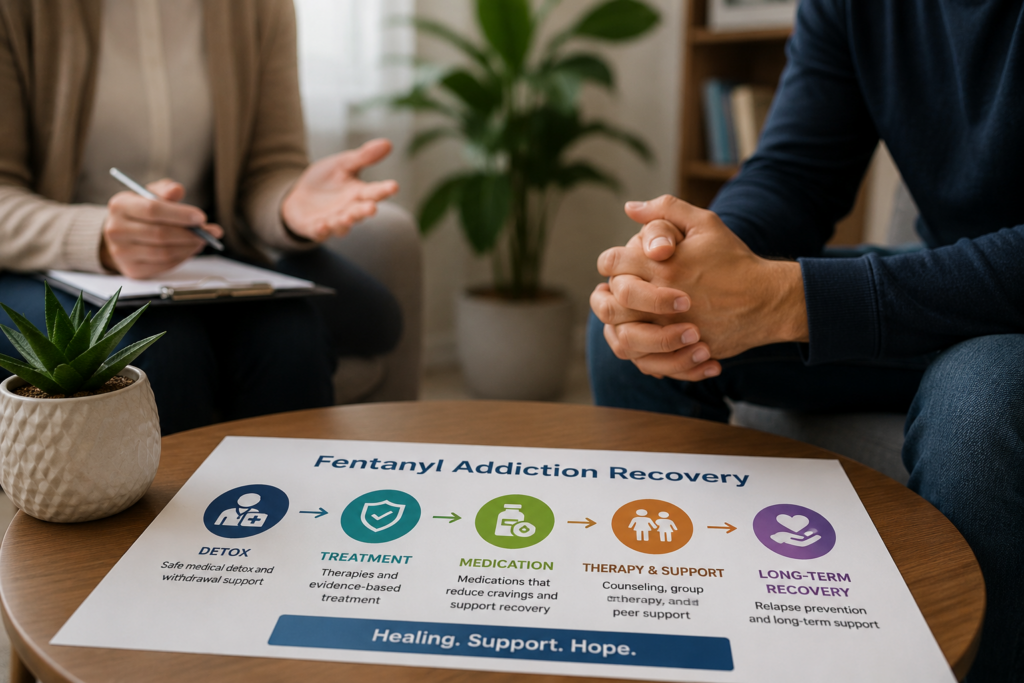
Detox handles the physical side. It’s the starting line, not the finish line.
A properly run fentanyl detox center should provide:
- A full intake assessment covering medical history, mental health, and how long fentanyl use has been going on
- Round-the-clock monitoring of vital signs through the worst of withdrawal
- Medications like buprenorphine or clonidine to take the edge off symptoms
- Nutrition, hydration, and rest to get the body stabilized again
- A direct handoff into residential or outpatient treatment once someone’s stable
Here’s where a lot of programs fall short: they stop at detox and send people home. That leaves the reason someone started using in the first place completely unaddressed. SCRC’s fentanyl detox center builds detox and rehab into one connected process, so nobody gets discharged with nowhere to go next.
5. What Happens in Fentanyl Addiction Treatment?
Once someone is medically stable, the work shifts from the body to everything else: the habits, the thought patterns, the relationships that got strained along the way. This is where fentanyl addiction treatment actually happens.
Levels of care typically include:
- Residential/Inpatient: Living on-site full time, the most structured and intensive option
- Partial Hospitalization (PHP): Full days of treatment, returning to sober living at night
- Intensive Outpatient (IOP): A few sessions a week, structured around work or school
- Sober Living: Substance-free housing during the early stretch of recovery
| Level of Care | Time Commitment | Best Fit For |
| Residential Inpatient | 24/7, usually 30-90 days | Severe addiction or an unstable home environment |
| Partial Hospitalization | 5-7 days a week, several hours daily | Stepping down from residential care |
| Intensive Outpatient | 3-5 days a week, a few hours each | Moderate addiction with solid support at home |
| Sober Living | Ongoing, self-paced | Anyone transitioning back to independent life |
The therapies that make up the core of treatment:
- Cognitive behavioral therapy (CBT), which helps people catch and change the thought patterns that lead back to use
- Medication-assisted treatment (MAT) to blunt cravings and lower relapse risk
- Individual counseling alongside group therapy
- Trauma-focused work, since unresolved trauma shows up in a huge share of opioid addiction cases
- Family therapy sessions built into the schedule, not offered as an afterthought
SCRC runs its programs out of Carlsbad and Cardiff By The Sea, both in North County San Diego. The clinical team is in-house, not outsourced, which matters more than people realize. Seeing the same therapist for twelve weeks builds a different kind of trust than rotating through whoever’s on shift.
6. What Does Long-Term Recovery Actually Look Like?
Treatment doesn’t end when someone walks out the door. The fentanyl recovery process stretches out over months, sometimes years, and the research is pretty consistent on this: people who stay in structured care for 90 days or longer tend to hold onto sobriety better than people who leave after 30.
A realistic timeline looks something like this:
- Weeks 1-2: Detox and medical stabilization
- Weeks 3-12: Residential or PHP treatment, building real coping skills
- Months 3-6: Step down to IOP or sober living while returning to work or school
- Months 6-12: Continued outpatient therapy, alumni support, relapse prevention planning
- Year 1 and beyond: Ongoing connection to support groups, sponsors, or an alumni community
Recovering from fentanyl addiction isn’t just about staying clean. It’s about building a life that doesn’t need the drug to function in the first place. That’s why vocational training and basic life skills, budgeting, holding down a job, handling an argument without falling apart, matter just as much as the clinical work. A year from now, those are the skills that keep someone sober, not the memory of detox.
Curious what this timeline could actually look like for your situation? Call SCRC’s admissions team at (800) 410-6552, or start with a confidential conversation about admissions.
7. Will Insurance Pay for Fentanyl Addiction Treatment?
Cost stops more people from calling than anything else. It shouldn’t, because coverage is usually broader than people assume.
Under the Mental Health Parity and Addiction Equity Act, most insurance plans have to cover substance use treatment on par with other medical care. The exact amount still varies by plan, which is why verifying benefits before admission is worth the ten minutes it takes.
SCRC works directly with major providers, including:
- Aetna
- Cigna
- Anthem Blue Cross Blue Shield
- United Healthcare
- GEHA
- UMR
- NYShip
The admissions team can verify your insurance confidentially, often the same day, and walk through exactly what’s covered before anyone commits to anything.
Take the Next Step Toward Fentanyl Addiction Recovery
Recovery from fentanyl addiction takes more than getting through withdrawal. At Southern California Recovery Centers, our personalized fentanyl addiction treatment programs provide support through detox, therapy, relapse prevention, and ongoing recovery planning. Speak with our team to explore your treatment options and take the next step toward lasting recovery.
Schedule a Confidential AssessmentFrequently Asked Questions
Is fentanyl withdrawal dangerous enough to need medical supervision?
Yes. The withdrawal itself rarely kills someone directly, but dehydration, vomiting, and the sharp overdose risk that follows relapse make medical supervision the safer route. A monitored detox center manages those risks in ways that trying to tough it out at home simply can’t.
How long does fentanyl stay in your system?
It typically clears the bloodstream within 24 hours, but it can still show up on a urine test for 1 to 3 days and on a hair follicle test for up to 90 days. This shifts depending on how often someone used, their metabolism, and body composition.
Can someone detox from fentanyl at home?
It’s not a good idea. Fentanyl clears fast, so withdrawal hits hard and quickly, with no one there to monitor vital signs or step in if something goes wrong. A licensed detox center gives someone the best odds of getting through this stretch safely.
Does SCRC offer fentanyl treatment near San Diego?
Yes. SCRC runs facilities in Carlsbad and Cardiff By The Sea, both in North County San Diego, with additional ties to care in Orange County near Dana Point. All three locations offer individualized treatment plans built around each client.
Will my employer find out if I go to treatment?
Treatment records fall under HIPAA protection, along with additional confidentiality rules specific to substance use care. SCRC treats every admission as strictly private, and many clients use FMLA leave to protect their job during treatment without disclosing details to their employer.
What if my insurance doesn’t cover the full cost?
Coverage varies plan to plan. SCRC’s admissions team walks through exactly what’s covered and what options exist for the remaining balance, including sliding scale arrangements where they’re available.
How fast can someone start treatment after calling?
In many cases, admission happens within 24 to 48 hours of that first call, especially if detox is medically urgent. The intake team moves fast for anyone in active withdrawal or crisis.
Can family members be part of the treatment process?
Yes, and honestly, it’s encouraged. Family therapy sessions are built into SCRC’s program because addiction rarely affects just one person in a household. Rebuilding trust while treatment is happening tends to make sobriety stick better afterward.
What’s the real difference between fentanyl detox and fentanyl rehab?
Detox handles the physical withdrawal and usually wraps up in under two weeks. Rehab tackles the psychological and behavioral side through therapy, and typically runs 30 to 90 days or longer depending on need.
Conclusion
No two people walk the same path through fentanyl addiction recovery, but every path starts the same way: one phone call. If you’re watching someone you love struggle, or you’re the one struggling, picking up the phone is usually the hardest part. Everything after that, SCRC’s team helps you figure out one step at a time.
Call Southern California Recovery Centers today at (800) 410-6552 for a free, completely confidential assessment. Insurance verification takes minutes, and admissions can often begin within a day or two of that first call.
Medically reviewed for accuracy by the clinical team at Southern California Recovery Centers. This article is for general information and doesn’t replace a professional medical evaluation.