
Objective
This blog explains why stopping Wellbutrin can feel so difficult for some people. It covers common withdrawal symptoms, why they happen, what may happen if the medicine is stopped too fast, and when to get medical help. It also explains how safe tapering, professional monitoring, and support through rehab centers in California, a detox center in California, or prescription pill addiction treatment may help when stopping feels overwhelming. Antidepressants can cause discontinuation symptoms, especially when stopped abruptly, and those symptoms may begin within days and last for weeks for some people.
Key Takeaways
- Stopping Wellbutrin can feel hard because the brain and body need time to adjust when the medicine is reduced or stopped.
- Symptoms can be physical, emotional, and neurological, and they may feel more intense if the medicine is stopped suddenly.
- Common problems may include irritability, anxiety, sleep trouble, headache, nausea, dizziness, poor focus, and mood changes.
- Withdrawal symptoms often start within a few days and may peak in the first one to two weeks, though some people have symptoms for longer.
- The safest plan is to taper under medical care instead of stopping on your own.
- Urgent medical help is needed for severe mood changes, suicidal thoughts, seizures, confusion, or other serious symptoms.
Table Of Contents
- Why Stopping Wellbutrin Feels So Hard
- Wellbutrin Withdrawal Symptoms In The Body And Mind
- What Happens If You Stop Abruptly
- Wellbutrin Withdrawal Timeline: Onset, Peak, And Duration
- Why Symptoms Can Feel So Intense
- Safe Tapering Strategies
- When To Seek Medical Help
- When Professional Support May Help
- Conclusion
- FAQs
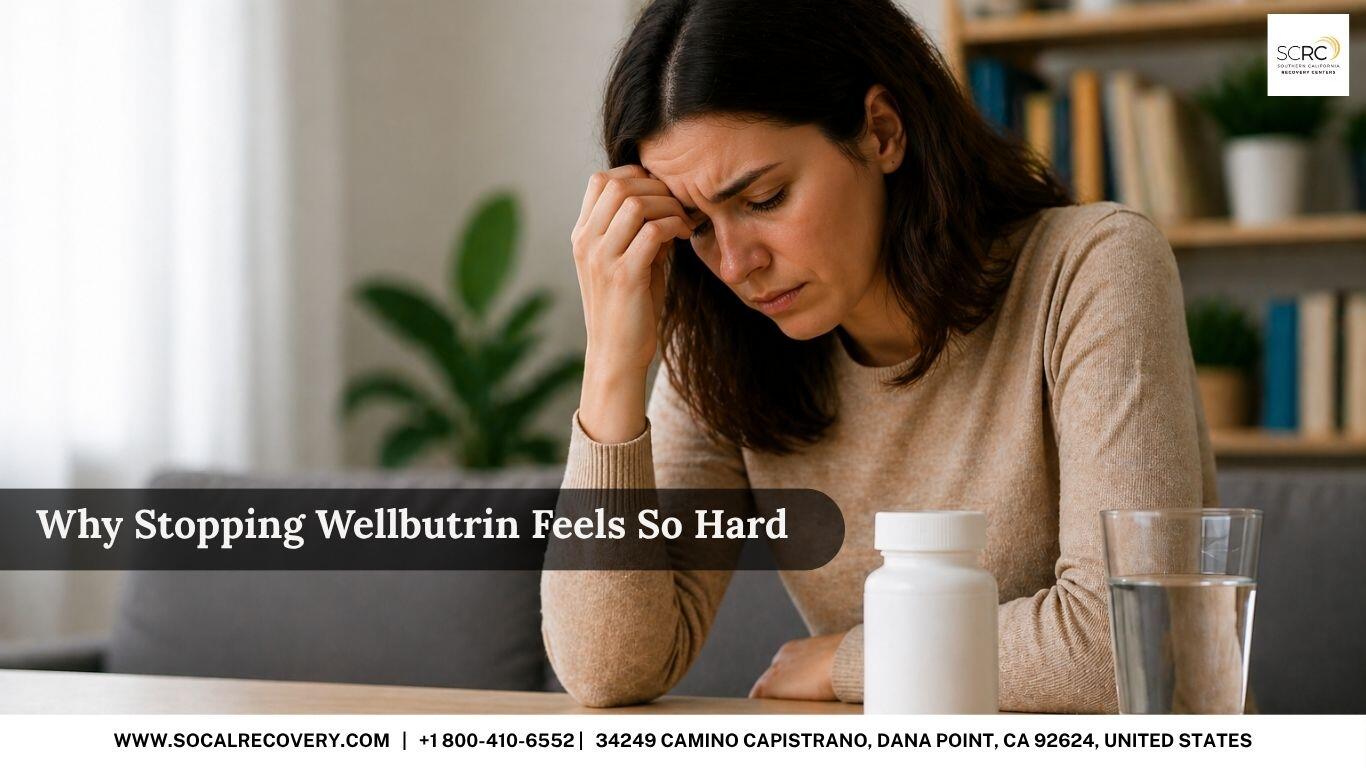
Why Stopping Wellbutrin Feels So Hard
Wellbutrin, also called bupropion, affects brain chemicals linked to mood, energy, and focus. When someone has taken it for a while, the brain gets used to that support. If the medicine is stopped too fast, the body may struggle to adjust. That is one reason withdrawal can feel so uncomfortable. Although bupropion is often thought to cause fewer withdrawal problems than some other antidepressants, official guidance still warns that antidepressants can cause discontinuation symptoms, especially after abrupt stopping.
Another reason it feels hard is that two things may happen at once. A person may have true withdrawal symptoms, and they may also feel the return of the condition the medicine was treating. That can make the experience feel confusing. Someone may ask, “Is this withdrawal, or am I getting depressed again?” Sometimes it takes a doctor or prescriber to sort that out. NHS guidance notes that withdrawal symptoms usually start within days of coming off antidepressants, while longer-term symptom return can look different and may need a slower plan.
In some cases, the difficulty is not only physical. It can also feel emotional and mental. That is why some people need more support than they expected. At Southern California Recovery Centers, this kind of struggle would usually be looked at as a full health issue, not just a matter of willpower.
Wellbutrin Withdrawal Symptoms In The Body And Mind
Withdrawal does not look the same for everyone. Some people have mild symptoms. Others feel strongly affected for days or weeks.
Physical symptoms may include:
- headache
- nausea
- dizziness or lightheadedness
- tiredness
- sweating
- shakiness
- stomach upset
- sleep problems
Emotional symptoms may include:
- irritability
- anxiety
- agitation
- low mood
- crying spells
- restlessness
- mood swings
Neurological or mental symptoms may include:
- trouble focusing
- confusion
- feeling mentally foggy
- vivid dreams
- poor concentration
- feeling “off” or disconnected
General antidepressant discontinuation guidance lists symptoms such as agitation, flu-like feelings, headache, insomnia, irritability, and vivid dreams. The Wellbutrin label also warns about anxiety, agitation, panic symptoms, hostility, impulsivity, akathisia, hypomania, and mania in some patients during treatment changes or after stopping.
These symptoms can be upsetting because they often occur when a person is trying to function normally. They may be going to work, taking care of family, or trying to sleep through the night. Even if the symptoms are not dangerous, they can still feel overwhelming.
What Happens If You Stop Abruptly
Stopping Wellbutrin all at once can make symptoms feel stronger. With antidepressants in general, abrupt stopping raises the chance of discontinuation symptoms. NHS and NHS Scotland both warn that sudden stopping can bring on withdrawal problems, and official product labeling also advises careful monitoring around treatment changes.
When a person stops abruptly, the brain has less time to adapt. That can lead to:
- faster symptom onset
- more intense mood changes
- sleep disruption
- a stronger sense of unease
- trouble working or caring for daily needs
In some people, abrupt stopping may also make it harder to tell whether the main mental health condition is returning. This matters because the right response may not be simply “push through it.” It may mean slowing the taper, restarting a previous dose under medical advice, or using closer monitoring. NHS guidance says some people need a slower dose reduction or a temporary return to a higher dose before trying again.
It is also important to remember that bupropion can lower the seizure threshold in some people. Because of that risk, serious symptoms should never be ignored.
Wellbutrin Withdrawal Timeline: Onset, Peak, And Duration
There is no single timeline that fits everyone, but a general pattern is common.
1. Onset
Withdrawal symptoms from antidepressants often begin within a few days of dose reduction or stopping. Some guidance says symptoms may start on average within two days, and the NHS says they usually begin within a few days.
2. Peak
For many people, the hardest stretch is in the first week or two. Symptoms may feel strongest as the body is trying to adapt to the change. Some people describe this period as the most frustrating because sleep, mood, and focus may all feel worse at the same time. General antidepressant withdrawal guidance says symptoms often settle within about seven to ten days, but not always.
3. Duration
Many people improve over a few weeks. Still, the NHS notes that some people may have more severe withdrawal, a later onset, or symptoms that last much longer. That is one reason medical follow-up matters.
Simple Timeline Table
| Stage | What It May Feel Like |
| First Few Days | Dizziness, headache, sleep changes, irritability, feeling “off” |
| First 1 To 2 Weeks | Symptoms may peak, mood may feel shaky, concentration may drop |
| After Several Weeks | Many improve, but some need slower tapering or closer medical support |
Why Symptoms Can Feel So Intense
Stopping can feel intense for a few main reasons.
First, the brain does not like sudden change. When a medicine has been affecting mood and energy pathways, a fast drop can feel rough.
Second, fear makes symptoms feel heavier. A person may feel dizzy, restless, or emotionally raw and start worrying that something is very wrong. That worry can make the experience feel even worse.
Third, sleep often gets disrupted. Once sleep gets worse, everything else can feel worse, too. Irritability, sadness, poor focus, and physical discomfort all hit harder when someone is exhausted. Insomnia is listed among common discontinuation symptoms in general antidepressant guidance.
Fourth, some people are dealing with more than withdrawal. They may also be facing depression, anxiety, trauma, or pill misuse. In those cases, stopping one medicine can uncover larger problems that need structured care.
Safe Tapering Strategies
The safest way to stop Wellbutrin is to work with a prescriber. There is not one taper plan that fits everyone. A safe plan depends on the dose, how long the medicine has been used, the person’s symptoms, and whether there are other mental health or substance use issues. NHS and other guidance recommend reducing more slowly if withdrawal symptoms become difficult.
Safe tapering usually includes:
- talking with the prescribing doctor before making changes
- reducing gradually instead of stopping suddenly
- keeping a simple symptom journal
- avoiding alcohol or other drugs during the taper
- asking for a faster follow-up if symptoms start rising
- Getting extra support if there is a history of pill misuse or depression
If someone is using Wellbutrin in a way other than prescribed, or mixing it with other substances, the safest next step may be prescription pill addiction treatment with medical oversight rather than trying to stop alone. In some cases, a detox center in California or one of the more structured rehab centers in California may be the safer setting, especially if there are severe symptoms, relapse risk, or co-occurring mental health needs.
When To Seek Medical Help
Some symptoms need prompt medical care.
Seek urgent medical help if there is:
- suicidal thinking
- severe agitation or panic
- confusion or psychosis
- seizure
- mania or extreme behavior change
- inability to sleep for a long period
- severe dehydration from vomiting or poor intake
When Professional Support May Help
Not everyone needs a higher level of care, but some people do.
Professional help may make sense when:
- Withdrawal symptoms are severe
- There is a history of taking extra pills or misusing medication
- depression or anxiety is getting worse
- The person keeps trying to stop and cannot
- There are other substances involved
- Home support is weak
Get Safe Support for Wellbutrin Withdrawal and Medication Changes
If Wellbutrin withdrawal symptoms feel overwhelming or difficult to manage, professional guidance can make the process safer and more comfortable. At Southern California Recovery Centers, our team provides personalized tapering support, medical monitoring, and evidence-based care to help you regain stability and confidence during recovery.
Speak With a Recovery Specialist TodayFrequently Asked Questions (FAQs)
1. How long do Wellbutrin withdrawal symptoms last?
Most people notice symptoms within a few days after reducing or stopping the medication. Symptoms often peak during the first one to two weeks and gradually improve over several weeks. However, some individuals may experience symptoms for a longer period, especially if the medication was stopped suddenly.
2. Is it dangerous to stop Wellbutrin suddenly?
Stopping abruptly can increase the risk of stronger withdrawal symptoms such as anxiety, dizziness, sleep problems, and mood changes. In rare cases, sudden changes in medication may increase the risk of serious symptoms like seizures or severe mood instability. That is why medical supervision is strongly recommended.
3. What are the most common Wellbutrin withdrawal symptoms?
Common symptoms may include:
- Irritability or anxiety
- Headache or dizziness
- Trouble sleeping
- Nausea or stomach upset
- Difficulty concentrating
- Mood swings
These symptoms can vary in intensity depending on the dose, duration of use, and individual health factors.
4. What is the safest way to stop taking Wellbutrin?
The safest method is a gradual taper, guided by a healthcare professional. This allows the brain and body to adjust slowly and reduces the risk of severe withdrawal symptoms. Never change your dose or stop medication without medical advice.
5. When should someone seek professional help during withdrawal?
Professional help may be necessary if:
- Symptoms feel severe or overwhelming
- Withdrawal keeps returning after multiple attempts
- Depression or anxiety worsens
- There is a history of medication misuse
- Daily responsibilities become difficult to manage
In these situations, medical monitoring or structured treatment programs can provide additional safety and support.
Conclusion
Stopping Wellbutrin is not just a physical process—it can be emotional, confusing, and sometimes frightening. Many people expect to feel better quickly after stopping a medication, but instead they experience mood swings, sleep problems, or anxiety that make daily life harder. That does not mean something is wrong with you. It often means your brain and body simply need more time and support to adjust.
The most important thing to remember is that you do not have to handle withdrawal alone. A gradual taper plan, regular medical check-ins, and emotional support can make the process much safer and more manageable. For people facing severe symptoms, repeated withdrawal attempts, or co-occurring substance use, structured care through professional programs may provide the stability and monitoring needed to recover safely.
Recovery is rarely about willpower—it is about having the right plan, the right support, and the right timing. With Southern California Recovery Centers medical guidance and proper care, most people can successfully stop medication and regain balance in their daily lives.