Objective
Help individuals and families understand why inpatient rehab produces better outcomes than self-managed recovery, and move them toward contacting Southern California Recovery Centers for a confidential assessment.
Key Takeaways
- Addiction is a medical condition, unmanaged withdrawal from alcohol or benzodiazepines can be fatal
- The relapse rate for self-managed recovery is significantly higher than for structured residential treatment
- Inpatient rehab addresses the root causes of addiction, not just the substance use
- 24/7 medical supervision, structured daily schedules, and clinical therapy work together in residential settings
- Aftercare and alumni support are what separate short-term sobriety from lasting recovery
- Most major insurance plans cover residential treatment, verifying coverage takes minutes
Table of Content
- Why Self-Recovery Is Harder Than It Looks
- What Inpatient Rehab Actually Provides
- The Real Benefits of Inpatient Rehab
- Inpatient Rehab vs. Recovering Alone: A Direct Comparison
- Who Benefits Most from Residential Treatment
- What Happens During a Typical Day in Inpatient Rehab
- The Role of Aftercare in Long-Term Recovery
- FAQs
- Conclusion
Most people who try to stop using alcohol or drugs on their own fail, not because they lack willpower, but because withdrawal is physically dangerous, cravings are neurologically driven, and the environment that enabled the addiction is still right there. The benefits of inpatient rehab go far beyond having a safe place to detox. Residential treatment removes you from the conditions that sustain addiction and replaces them with structure, clinical care, and a community of people doing the same work.
Some people white-knuckle through the first few weeks and consider the problem solved. Then something stressful happens, a job loss, a relationship conflict, an old contact reaching out, and without the skills to manage it sober, they’re back where they started. Research consistently shows that relapse rates for untreated addiction are between 40 and 60 percent even with professional help; without it, the numbers are worse.
This isn’t about willpower. It’s about having the right support structure in place.
If you or someone in your family is weighing options right now, contact our admissions team at Southern California Recovery Centers for a completely confidential conversation. We’ll help you understand what treatment looks like and how your insurance can cover it.
Why Self-Recovery Is Harder Than It Looks
Deciding to quit is not the same as being able to quit. The two get confused constantly.
Alcohol and benzodiazepine withdrawal can cause seizures, cardiac events, and death if not medically managed. Opioid withdrawal, while rarely fatal on its own, produces symptoms severe enough that most people use again within 72 hours just to stop the physical pain. Attempting withdrawal without medical supervision is not just difficult, for certain substances, it’s genuinely dangerous.
Beyond the physical withdrawal, the brain takes time to recalibrate. Dopamine systems affected by long-term substance use don’t normalize overnight. Anxiety, depression, and insomnia in early recovery are common, not signs of failure, but signs of a brain adjusting. Without clinical support, most people interpret those symptoms as evidence that sobriety isn’t working and return to the substance for relief.
Common reasons self-recovery attempts fail:
- No medical management of withdrawal symptoms
- Continued access to the substance or people who use
- No structured daily routine to fill the time previously spent using
- Unresolved trauma driving the addiction
- No accountability system or peer support
- No plan for high-risk situations or emotional triggers
What Inpatient Rehab Actually Provides
Inpatient addiction treatment means living at the treatment facility for the duration of your program. You’re not commuting to appointments and returning to an environment full of triggers. You’re in a structured, clinically supervised setting around the clock.
At Southern California Recovery Centers, residential treatment is built around four core pillars: life skills, trauma work, structure, and continuity of care. That last one matters more than most people realise. Many programs outsource their therapists, which means different faces, inconsistent approaches, and clinical work that never goes deep enough. At SCRC, the treatment team is in-house. The same clinicians follow your progress from intake through discharge.
The residential rehab advantages of this model are significant. You don’t start over with a new therapist every few weeks. The clinical team builds on what they know about you, which produces better outcomes.
The Real Benefits of Inpatient Rehab
24/7 Medical Supervision
Medically supervised detox is the first stage of residential treatment. Withdrawal is managed with medications where appropriate, and vital signs are monitored. For alcohol dependence in particular, this is not optional, it’s a safety requirement.
Structured Daily Schedule
Structure is one of the inpatient addiction treatment benefits that people underestimate until they’re in it. Addiction thrives in unstructured time. A residential program fills each day with therapy sessions, group work, meals, exercise, vocational training, and reflection time. There’s no gap in the day where cravings can take over.
Individual and Group Therapy
Evidence-based therapies, CBT, DBT, EMDR, Seeking Safety, Somatic Experiencing, address the behavioural patterns and trauma underlying the addiction, not just the substance use. Trauma work in particular is something SCRC prioritises. It’s rare in men’s recovery, and it’s one of the primary reasons relapse happens when it goes unaddressed.
Peer Community
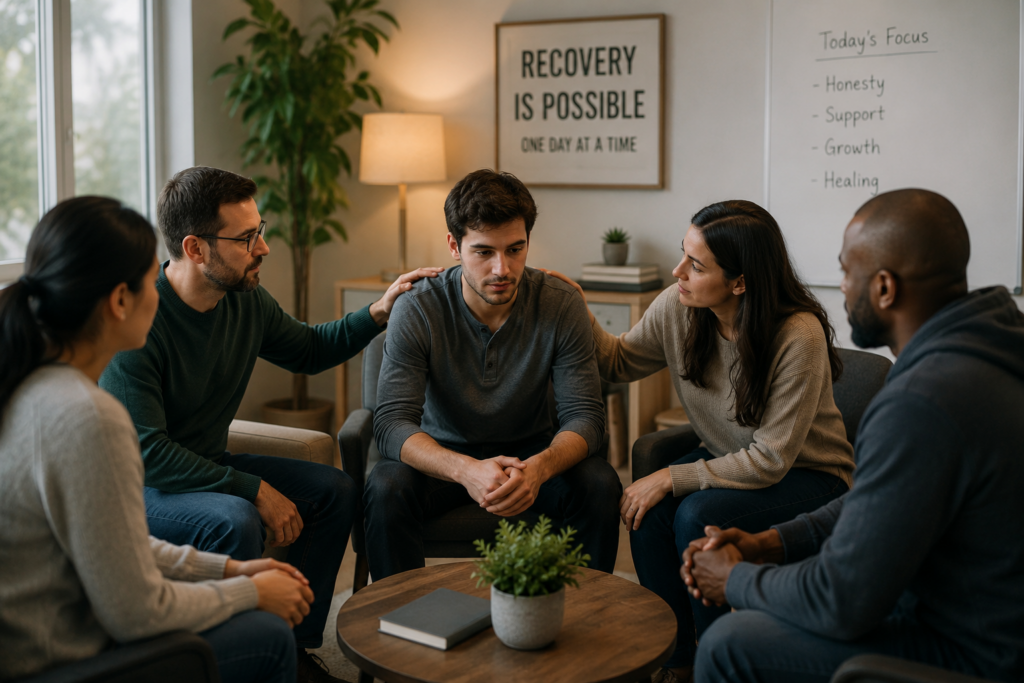
Recovery in isolation doesn’t work long-term. Residential treatment puts you in a community of people going through the same process, which reduces shame, builds accountability, and creates connections that often extend well beyond treatment.
Removal from Triggers
The environment matters enormously. Staying in a location associated with past use makes early recovery significantly harder. Inpatient treatment in a different physical setting, particularly SCRC’s locations in Carlsbad and Cardiff by the Sea in North County San Diego, creates real distance from the people, places, and situations tied to active addiction.
Ready to understand your options? Verify your insurance with Southern California Recovery Centers in minutes. Most major providers including Aetna, Cigna, UnitedHealthcare, and GEHA are accepted.
Inpatient Rehab vs. Recovering Alone: A Direct Comparison
| Factor | Self-Recovery | Inpatient Rehab |
| Medical supervision | None | 24/7 clinical oversight |
| Withdrawal management | Unmanaged, potentially dangerous | Medically supervised detox |
| Trigger exposure | High | Removed from home environment |
| Therapy access | None or limited | Daily individual and group therapy |
| Trauma treatment | Rarely addressed | EMDR, Somatic Experiencing, and more |
| Accountability | Self-imposed | Clinical team and peer community |
| Relapse risk in first 90 days | Very high | Significantly reduced |
| Aftercare planning | None | Alumni program and sober living support |
The differences are not marginal. The structure of residential treatment addresses the biological, psychological, and environmental factors that self-recovery attempts simply cannot reach.
Who Benefits Most from Residential Treatment
Inpatient care is not the only level of treatment available, but certain situations make it the appropriate, and sometimes necessary, choice.
Residential treatment is typically recommended when:
- The person has a history of multiple relapse attempts
- Physical dependence requires medically supervised withdrawal
- Co-occurring mental health conditions like depression, PTSD, or anxiety are present
- The home environment is not safe or is actively enabling substance use
- Outpatient treatment has been tried without success
- The addiction involves high-risk substances such as alcohol, benzodiazepines, fentanyl, or heroin
SCRC works with men in their 20s and 30s, veterans, active duty military, and executives, populations with specific stressors and life circumstances that require tailored approaches. A 24-year-old dealing with failure-to-launch dynamics has different treatment needs than a 38-year-old CEO managing career pressure alongside addiction. Both are served here, and both need residential structure to get traction.
Families in areas around Carlsbad, Cardiff by the Sea, Encinitas, Vista, and across San Diego County and Southern California contact us looking for answers. If you’re searching for inpatient rehab in Orange County or anywhere in Southern California, SCRC’s residential program provides clinical-grade care with in-house therapists and a structured daily model.
What Happens During a Typical Day in Inpatient Rehab
Understanding the day-to-day structure helps remove some of the fear around committing to treatment.
A general residential day at SCRC looks like this:
| Time | Activity |
| Morning | Wake-up, breakfast, mindfulness or meditation |
| Mid-morning | Individual therapy session or group therapy |
| Midday | Lunch, vocational skills or life skills training |
| Afternoon | Group therapy, 12-step work, recreational activity |
| Evening | Dinner, peer group, reflection or journaling |
| Night | Free time, lights out, secure, sober environment |
This schedule is not rigid in a punishing sense. It provides a container. Clients are building the kind of daily structure they’ll need to sustain sobriety after discharge.
Life skills and vocational training are a specific focus at SCRC. Sobriety is just the beginning, returning to life means being able to hold a job, manage relationships, and handle stress. Those skills are taught here, not assumed.
The Role of Aftercare in Long-Term Recovery
Discharge from inpatient treatment is not the end. For most people, it’s the riskiest period.
The first 90 days after leaving residential treatment carry the highest relapse risk. Why choose inpatient rehab with a strong aftercare program? Because the transition back to daily life needs support infrastructure, not a handshake and a good luck.
At Southern California Recovery Centers, every client meets with a counsellor toward the end of treatment to build an aftercare plan. Options include sober living homes in North County San Diego, alumni group participation, ongoing outpatient therapy, and 12-step program integration.
The SCRC alumni community is an active one. Former clients stay connected, support incoming graduates, and are part of what makes long-term sobriety realistic, not just hopeful.
Families are part of this too. Addiction affects the entire household. Family group sessions are available at SCRC, and involvement from family members has been shown to significantly improve recovery outcomes. A parent or spouse who understands the recovery process can be a support system rather than an inadvertent trigger.
Discover the Benefits of Professional Inpatient Rehab
Recovering from addiction doesn’t have to be a journey you face alone. Southern California Recovery Centers provides medically supervised detox, evidence-based therapies, personalized treatment plans, and ongoing aftercare to help you achieve lasting recovery. Our admissions team is here to answer your questions, verify your insurance, and guide you toward the right level of care.
Verify Your Insurance & Start Recovery TodayFAQs
Is inpatient rehab the right choice if this is my first time seeking treatment?
For someone with a physical dependence on alcohol, opioids, or benzodiazepines, yes. The withdrawal alone can be dangerous without medical supervision. Even for those without severe physical dependence, starting at the residential level gives you the strongest foundation. Stepping down to outpatient later is easier than stepping up after an outpatient attempt fails.
What are the signs that someone needs inpatient rather than outpatient treatment?
Signs that residential care is appropriate include: inability to stop despite multiple attempts, using in the morning or to avoid withdrawal, continued use despite serious consequences (job loss, relationship breakdown, legal issues), co-occurring depression, anxiety, or PTSD, and a home environment where substance use is present. If three or more of these apply, residential treatment is the right level of care.
How long does inpatient rehab last?
Programs commonly run 30, 60, or 90 days. SCRC determines the appropriate duration based on clinical assessment, the severity of dependence, presence of co-occurring conditions, and prior treatment history. Longer stays produce better long-term outcomes for most people with moderate to severe addiction.
Does insurance cover inpatient rehab in Southern California?
Most major insurance plans cover residential addiction treatment. SCRC works with Aetna, Cigna, UnitedHealthcare, GEHA, and others. The admissions team acts as a liaison between you and your insurer to maximise coverage. You can verify your insurance here in minutes. Cost concerns should not stop someone from getting assessed, that conversation starts confidentially with no obligation.
Is there inpatient rehab near San Diego or North County San Diego?
Yes. Southern California Recovery Centers has residential treatment facilities in Carlsbad and Cardiff by the Sea in North County San Diego. Both locations are designed with recovery in mind, away from the pressures of urban environments, close to the coast, with facilities built to support the work of early recovery. Clients from Encinitas, Vista, Oceanside, and across San Diego County regularly access care here.
What makes SCRC different from other residential rehab programs?
The in-house clinical team is the clearest differentiator. SCRC does not outsource its therapists. The same team follows each client throughout treatment, which creates clinical continuity that is uncommon in residential programs. The emphasis on trauma work, EMDR, Seeking Safety, Somatic Experiencing, is also relatively rare, particularly in men’s recovery.
Can family members be involved during inpatient treatment?
Yes, and SCRC actively encourages it. Family group sessions are part of the program because addiction affects the entire family system. Involvement from family members improves recovery outcomes and helps repair the relationships that addiction has damaged.
What happens if I relapse after completing inpatient rehab?
Relapse during or after treatment is not evidence of failure, it’s information. It means the recovery plan needs adjustment. SCRC’s alumni program and aftercare support are designed to catch people before a lapse becomes a full relapse. If someone does return to use after completing treatment, re-entering care quickly produces significantly better outcomes than waiting.
How do I know if inpatient rehab at SCRC is the right fit for my situation?
The first step is a confidential conversation with the admissions team at (800) 410-6552. There is no pressure and no obligation. The team will ask about your history, your substance use, your living situation, and any co-occurring conditions, and give you an honest assessment of what level of care makes sense. If SCRC is the right fit, you’ll know. If it isn’t, they’ll tell you that too.
What should someone bring to inpatient rehab?
Comfortable clothing, personal hygiene items, any prescription medications with documentation, a photo ID, and insurance information. SCRC provides a full list during the admissions process. Electronics policy varies, ask the admissions team for current guidelines.
Conclusion
Self-recovery attempts are not a character flaw, they’re a reasonable first impulse. But addiction is a medical condition with neurological, psychological, and environmental dimensions, and managing all of those without clinical help is not realistic for most people.
The residential rehab advantages at Southern California Recovery Centers come from 14 years of experience, an in-house clinical team, evidence-based trauma treatment, and a structured model that builds the life skills sobriety requires. Located in Carlsbad and Cardiff by the Sea in North County San Diego, SCRC serves individuals from across Southern California who are ready to stop managing alone and start building something real.
Call (800) 410-6552 today for a completely confidential assessment. There’s no obligation, just an honest conversation about what treatment could look like for you or your loved one.
You can also start the admissions process online, or contact our team directly with any questions.
This article is intended for informational purposes only and is reviewed by clinical staff at Southern California Recovery Centers. It does not constitute medical advice. Anyone experiencing a medical emergency related to substance withdrawal should call 911 or go to the nearest emergency room immediately.